

Loading…
Allan Border Debut, Biography, Stats, Net Worth, Wife, IPL Team, Records, Career
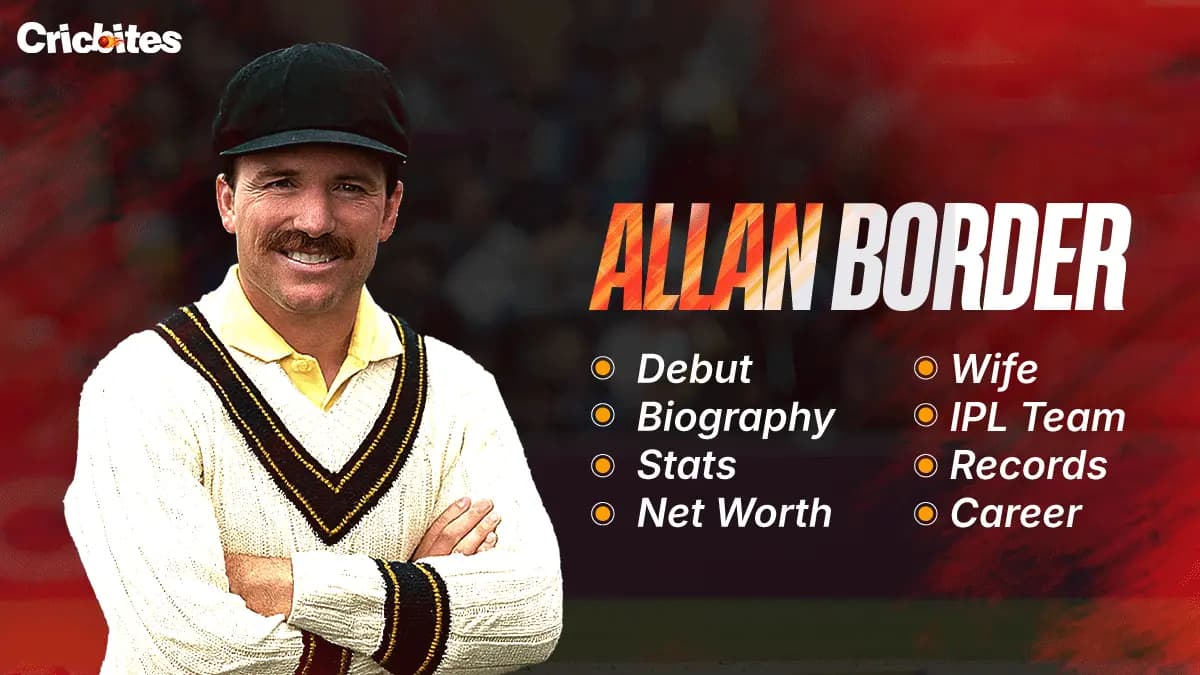
Look, if you want to understand Australian cricket, you have to understand Allan Border. That’s all there is to it. This man didn’t just play cricket. He saved Australian cricket when it was at its lowest ebb. Born on July 27, 1955, in Cremorne, Sydney, Allan Robert Border became the kind of cricketer every team dreams of. A left-handed middle-order batsman who could bat all day, bowl a bit of slow left-arm orthodox when needed, and catch anything that came his way. He played from 1978 to 1994, and in that time, he became a legend. Not a flashy, Instagram-story kind of legend. But a real, rock-solid human being who just kept going, no matter what.
Early Life and Biography
Allan Border grew up in Sydney, New South Wales. Sydney has always produced great cricketers, but Border was different. He wasn’t the most naturally talented player around. He wasn’t hitting sixes from the age of five or having newspaper articles written about him as a child. He was just a kid who loved cricket and worked incredibly hard at it. That was Border’s defining characteristic. Everything he achieved was through sheer grit and determination. He started playing grade cricket in Sydney, and gradually, people began to notice this left-hander who didn’t give his wicket away easily. By 1977, he had made it to first-class cricket, playing for New South Wales. He was 22 years old, not particularly young by today’s standards, but he was ready. And when he got his chance, he never looked back.
Domestic and International Debut
Border’s domestic career began in 1977 with New South Wales. He played good cricket, nothing spectacular at first, but consistently performed well. This consistency is what made people take notice. In those days, consistency mattered more than strike rates and social media highlights. He later played for Queensland in Australia and also for Gloucestershire and Essex in England. These experiences in county cricket made him stronger and more adaptable. Playing in English conditions, on different pitches, against different bowlers, further honed his skills.
His international debut came on December 29, 1978, in a Test match against England. Imagine that. Your first Test match against England, the old enemy. Border stepped onto the field and showed he belonged at that level. Just two weeks later, on January 13, 1979, he made his ODI debut, also against England. From that point on, for the next sixteen years, Allan Border was an automatic selection for Australia. He became the kind of player you could rely on when wickets were falling, when the team was in trouble, when everything seemed to be going wrong. In fact, that became his defining characteristic: performing well under pressure.
Career
Allan Border’s career is the story of Australian cricket in the 1980s and early 1990s. When he started, Australia was a good team. But soon, due to World Series Cricket and other problems, they lost many of their best players. The team fell apart. They lost matches, lost series, and lost respect. And amidst all this turmoil, Allan Border stood firm, just kept batting, and kept batting. He didn’t complain, he didn’t make excuses, he didn’t give up. He just kept scoring runs.
In 1984, he became the captain of Australia. Now, captaining a losing team is one of the toughest jobs in cricket. Everyone blames you, the media criticizes you, the fans lose faith. But Border accepted it. And slowly, painstakingly, he began to rebuild Australian cricket. He made the team stronger, more professional, more aggressive. He refused to accept defeat as inevitable. In 1987, all his hard work paid off when he led Australia to their first-ever One Day International World Cup victory. That tournament, co-hosted by India and Pakistan, is where Border truly became a national hero.
He played 153 consecutive Test matches. Read that again. 153 consecutive Tests. No breaks, no rest, no “I need to manage my workload.” He just kept playing. By the time he retired in 1994, he had scored 11,174 runs in Test cricket, a world record at the time. He had carried Australian cricket on his shoulders for over a decade.
Biography Details
| Attribute | Information |
|---|---|
| Full Name | Allan Robert Border |
| Date of Birth | 27 July 1955 |
| Age | 70 years (as of 2025–26) |
| Birthplace | Cremorne, Sydney, New South Wales, Australia |
| Nationality | Australian |
| Role | Batter (Middle-order batsman) |
| Batting Style | Left-handed |
| Bowling Style | Slow left-arm orthodox |
| International Team | Australia (1978–1994) |
| Domestic Teams | New South Wales, Queensland, Gloucestershire, Essex |
| Marital Status | Married |
| Wife | Jane (often referenced as Jane Hiscox in fan/secondary sources) |
| Net Worth | Estimated around ~$25 million USD (various online estimates; not official) |
Career Batting Stats, Bowling Stats & Fielding Stats
Left-Handed Batsman Stats
| Format | Years Active | Matches | Innings | Not Outs | Runs | Highest Score | 100s | 50s | Bat Avg | Strike Rate |
|---|---|---|---|---|---|---|---|---|---|---|
| Test | 1978–1994 | 156 | 265 | 44 | 11,174 | 205 | 27 | 63 | 50.56 | – |
| ODI | 1979–1994 | 273 | 252 | 39 | 6,524 | 127* | 3 | 39 | 30.63 | 71.43 |
| T20I | – | 0 | 0 | 0 | 0 | – | 0 | 0 | – | – |
Slow left-arm orthodox Bowler Stats
| Format | Years Active | Matches | Balls Bowled | Wickets | Best Bowling | Bowling Avg | Economy |
|---|---|---|---|---|---|---|---|
| Test | 1978–1994 | 156 | 4,009 | 39 | 7/46 | 39.10 | 2.28 |
| ODI | 1979–1994 | 273 | 2,661 | 73 | 3/20 | 28.37 | 4.67 |
| T20I | – | 0 | 0 | 0 | – | – | – |
Fielding Stats
| Format | Years Active | Catches | Stumpings | Run Outs* |
|---|---|---|---|---|
| Test | 1978–1994 | 156 | 0 | – |
| ODI | 1979–1994 | 127 | 0 | – |
| T20I | – | 0 | 0 | – |
Playing Style and Strengths
Border’s batting style was simple. Come to the crease, settle in, wear down the bowlers, and score runs. He wasn’t elegant like David Gower or explosive like Viv Richards. He was practical. Effective. His temperament was his greatest strength. When wickets were falling around him, Border would dig in even harder. The tougher the situation, the better he played. He was a left-handed batsman, which gave him some advantages against certain bowlers, but mostly it was his mental strength that set him apart.
He could also bowl, slow left-arm orthodox. Not world-class, but useful enough to give his main bowlers a break and occasionally pick up a wicket. His fielding, especially close to the wicket, was excellent. He took match-winning catches, and he rarely dropped an easy one.
Records and Achievements
The records tell the story. The most Test runs in the world at the time of his retirement. 153 consecutive Test matches, an unimaginable achievement. He led Australia to their first World Cup title in 1987, their first title in One Day Internationals. These aren’t just statistics; they are symbols of his dedication.
After his retirement, he was inducted as one of the inaugural members of the ICC Cricket Hall of Fame. And perhaps the greatest honor: Australia’s annual award for the best male cricketer is called the Allan Border Medal. When an award is named after you, you know you’ve truly accomplished something extraordinary.
Net Worth and Earnings
Border’s net worth has not been officially disclosed anywhere. Online estimates place it between four and ten million US dollars, but these are just estimates, not definitive figures. Remember, he played in an era before massive TV deals, IPL contracts, and multi-million dollar endorsements. Cricketers in the 1980s and 1990s earned good money, but not nearly as much as they do today. His income came from cricket salaries, commentary work after retirement, roles with cricket boards, and some endorsements.
Personal Life
Allan Border is married to Jane Hiscox. He has always kept his personal life quite private, which is a commendable trait in today’s world where people share everything. They have children, including a son named Dan Border, who has been mentioned in several sources. After retirement, Border became a respected cricket commentator, offering his insights based on his decades of experience. You can often hear his voice while watching matches.
Read More: Madan Lal Debut, Biography, Stats, Net Worth, Wife, IPL Team, Records, Career




Hello Readers! My name is Satyaki Das. I work as an SEO specialist and content writer at Cricbites.com and I have over 2 years of experience. I enjoy writing easy-to-read and engaging sports content, especially clear and helpful cricket stories for fans. I hope you enjoy my articles. Thanks for reading!