

Loading…

Brendon McCullum Backs Harry Brook as England’s Future Test Captain
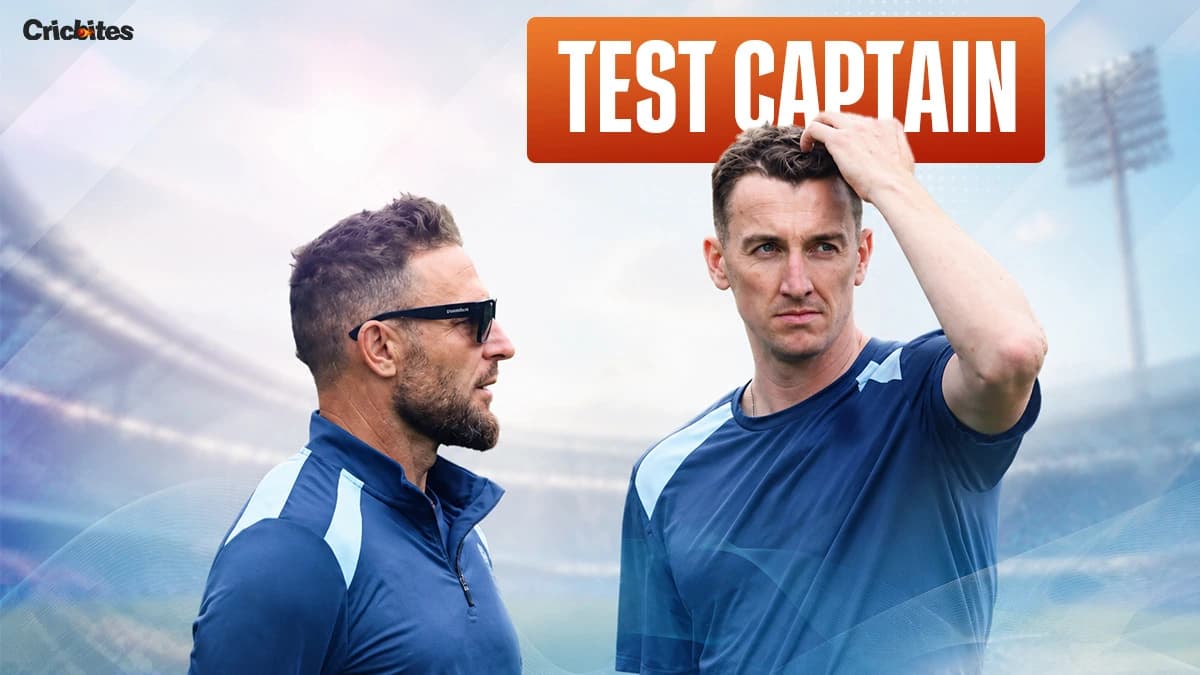
Ben Stokes’ retirement from Test cricket marks the beginning of a new chapter for English cricket and the issue of who can take the reins of the red-ball side in the long term has instantly become a significant discussion topic. Brendon McCullum has highlighted Harry Brook as a future leader, despite Joe Root being recalled to captain England for the short-term transition.
McCullum’s encouragement is vital since Brook has already established himself as one of England’s best modern-day batsmen. The former New Zealand captain feels the rising star has the attributes to someday lead England’s Test team. McCullum has spoken about Brook being molded into the future Test captain of England, and is part of the long-term rebuilding plans.
England’s Test Team Gets a New Chapter
Ben Stokes’s retirement marks the end of one of the unique eras of leadership in contemporary English Test cricket. Stokes and McCullum had worked together for more than four years and brought an aggressive and upbeat mentality that changed the approach to Test cricket in England.
With Stokes unavailable, England were faced with the difficult task of replacing not just a captain but a leader who had helped to define the team’s identity.
Joe Root is back in the leadership and provides an experienced alternative for England amid the changeover. Root’s expertise of Test cricket and familiarity with the group make him an obvious short-term option. But the wider leadership discussion is already starting to move beyond Root’s era with Brook emerging as one of the best names for the future.
Brendon McCullum on why Harry Brook is a future leader
Brook has risen throughout international cricket at a spectacular pace. His daring batting, ability to score rapidly and confidence against high-quality bowling have made him one of the most interesting players in England.
But leadership is much more than just batting. A Test captain must to grasp the match scenarios, supervise bowlers, make tactical decisions and keep his cool for five days. McCullum’s words imply England regard Brook as someone who can grow into those attributes over time rather than being thrust into the position prematurely.
This strategy may be of assistance to Brook. Instead of immediately throwing the huge burden of Test captaincy onto his shoulders, England may enable him to gather leadership experience while further developing as a senior international player.
Joe Root brings much-needed stability to England
There is talk of Brook being captain in the future, but the return of Root to the leadership role may be of huge benefit.
The existing set-up could provide England with the best of both worlds then short-term stability and long-term planning.
| Leadership Factor | Joe Root | Harry Brook |
|---|---|---|
| Test experience | Extremely high | High and developing |
| Captaincy experience | Extensive | Developing |
| International batting experience | Exceptional | Exceptional |
| Long-term leadership potential | Short-to-medium term | Strong future option |
| Role in transition | Immediate stability | Future development |
Why Brook Is the Natural Successor
One of Brook’s great assets is his confidence. Test leadership is about a player who is ready to take big risks, especially at the crunch time. Brook’s offensive approach is perfectly in line with the attitude England adopted in the Stokes-McCullum period.
His batting skill also gives him a voice in the dressing room. A captain who always contributes with the bat may impact a team not only tactically but also via their own performance.
But Brook will still need to prove his maturity and consistency. ‘Leadership at Test level is about dealing with pressure over a lengthy time frame, reacting to adversity and communicating well with team-mates. It will depend on his further progress in these areas if McCullum’s prognosis will be accurate.
The Next Test Captain of England Could Influence Its Future
The next permanent Test captain of England will inherit a side in the throes of a major transformation. There’s a huge hole to fill with Stokes’ retirement and McCullum stepping down from the Test coaching post is another big change.
The selection of Stephen Fleming as new Test coach is another piece in the rebuilding process. Now England will have a chance to forge a new leadership setup, while keeping hold of some of the tenets that worked under Stokes and McCullum.
Brook might be a significant bridge between the last age and the future. His experience with England’s white-ball teams, his position as a top hitter and his present leadership duties make his base solid.
Harry Brook’s Road Ahead
Brendon McCullum’s endorsement has placed Harry Brook firmly on England’s long-term leadership radar. For now, England needs the experience and steadiness that Joe Root brings after Stokes’ retirement. But the larger goal could be to groom Brook for the moment when it is suitable for him to take over.
There is no reason for England to accelerate that change. Brook can continue to work on his batting, gain leadership experience and learn from senior players before ultimately taking over the Test team.
If it sticks, England may have found a captain to take the attacking ethos of the Stokes-McCullum period into a new age.
Conclusion
The next several years will therefore be critical for Brook. His performances will be important but so will his leadership, communication and decision making under pressure situations. McCullum’s backing is a big first step but eventually Brook will have to show on the pitch he’s ready to be England’s next great Test captain.
Stay Updated with Cricbites
From England’s leadership change to key international series, player updates, match analysis and new cricket trends, being updated makes every game more entertaining. For all the newest news, stories and insights from the world of cricket, visit cricbites and keep following the major happenings.