

Loading…

Cricket 2026: New Heroes, New Records and a Changing Cricket Landscape
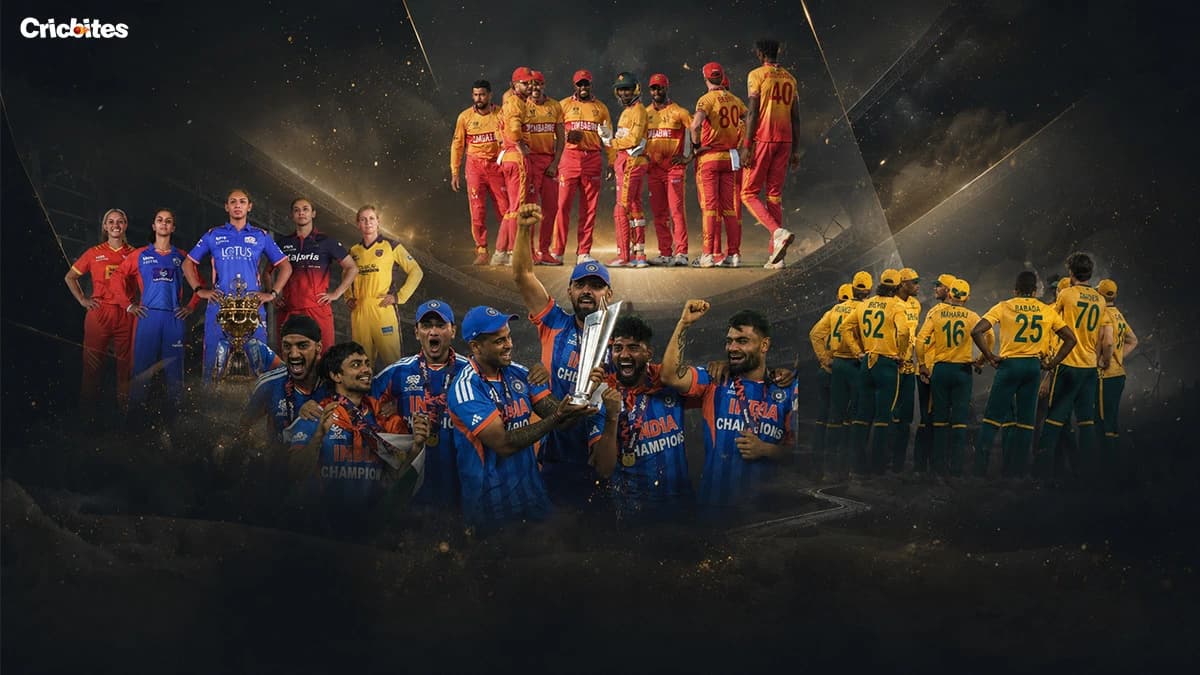
2026 is a thrilling new age for cricket, with the old guard still dominating the headlines, but a younger generation quickly forging their own identity. This year has also been one of record-breaking performances in the ICC Men’s T20 World Cup with young superstars making their international impact, showing how swiftly the sport is evolving. India’s T20 World Cup triumph, the rise of players such as Yuvraj Samra and Vaibhav Sooryavanshi and the rising clout of franchise cricket are all pointers to a shifting picture in the sport.
A New Generation Comes to the Fore
One of the major story lines of cricket in 2026 has been the emergence of young players who are not only filling team spots, but are actively impacting international matches. Canada’s Yuvraj Samra became the youngest player to achieve a World Cup century when he hammered 110 against New Zealand at the age of only 19. His performance was also the first T20 World Cup century by a batsman from an Associate country, a sign of how talent is coming from the shadows of cricket’s traditional powerhouses.
Moreover, in India, young talent has also grown quickly. In Zimbabwe, only 15-year-old Vaibhav Sooryavanshi made a terrific impression in India’s T20I series, winning Player of the Series honors after hitting two half-centuries. His accomplishments are a testament to younger players being inducted into international cricket at a nascent stage.
These changes show that the next generation is emerging sooner, is being exposed quicker and is becoming used to worldwide pressure sooner than ever before.
2026 T20 World Cup: A Record-Breaking Tournament
The ICC Men’s T20 World Cup 2026 was one of the most defining events on the cricket calendar. India beat New Zealand by 96 runs in the final to become the first team to win three Men’s T20 World Cup championships. India also became just the second team to win back-to-back editions of the competition.
The competition yielded some fantastic batting figures. India’s semi-final versus England had a total of 499 runs, while the final was the highest total in a T20 World Cup final, with India scoring 255/5. India also became the first side to cross the 100 sixes mark in a single T20 World Cup campaign.
Individual players also left their mark on the record books. Sahibzada Farhan of Pakistan scored 383 runs. Finn Allen of New Zealand recorded the quickest century in the Men’s T20 World Cup history off only 33 balls. In the final, Abhishek Sharma of India scored his fifty in only 18 balls while Sanju Samson clinched the competition with 24 sixes.
| 2026 T20 World Cup Record | Achievement |
|---|---|
| India’s titles | 3, the most by any team |
| Highest final total | India – 255/5 |
| Fastest World Cup century | Finn Allen – 33 balls |
| Most runs in the tournament | Sahibzada Farhan – 383 |
| Highest final score | Sanju Samson – 89 |
| Most sixes by a team | India – 106 |
Performance Is Changing: Technology And Data
Cricket is now very much part of technology. Teams now use video analysis, performance monitoring, bio mechanics and top-level data to affect a player’s preparation and tactical choices.
More and more data is being utilized to judge performances outside of conventional averages and strike rates. New analytical methodologies are trying to assess the contribution of a player in the setting of the match, the opponent and predicted results. This may assist teams find useful performances that are not always evident from traditional stats.
Technology has also revolutionized the way people consume cricket. Live stats, immediate highlights, fantasy platforms, social media and short-form video make it possible for fans to follow games from almost anywhere.
Another Dimension: The Olympic Future
Another big change that will shape the future of the sport is cricket’s return to the Olympic program for Los Angeles 2028. The T20 format is a chance to take cricket to new audiences and engage the game with younger sports enthusiasts across the globe.
The Olympics might give another international stage for Associate nations and foster growth of the game in areas where it has historically been low-profile. It might also enhance cricket’s international reputation.
The Future of the Cricket
2026 is a year of transformation for the cricket scene. Records are tumbling at a breathtaking rate, young players are emerging earlier, T20 cricket is having a bigger and bigger impact and new countries are taking on the old guard.
Cricket must also safeguard the traditions that have made the sport successful. In the future, there will be a need to strike the right balance between commercial leagues and international cricket, T20 entertainment and Test match tradition, and established powers and growing countries.
If 2026 has shown us anything, it’s that the future of cricket will not be in the hands of players who have already created history. Every season has its own heroes and the way they play the game altering how spectators believe in the game.
Conclusion
Cricket in 2026 is quicker, more competitive and more global than ever before. There is a bright future ahead for the game with a record-breaking T20 World Cup, breakout performances from youthful players and extension of the game into new areas. Meanwhile the sport confronts tough concerns around player fatigue, Test cricket, franchise leagues and worldwide representation.
The next few years are so likely to be among the most transformational in the history of cricket. The new heroes will have to make room for the existing legends and the records they set will be challenged by the following generation.
Get More News On Cricbites
Get all the latest cricket news, records, player performances, and stories from across the globe. For more cricket updates, insights and intriguing stories from the game visit Cricbites.