

Loading…

ICC CEO Sanjog Gupta: ODIs Can Thrive if Bilateral Cricket Finds Purpose
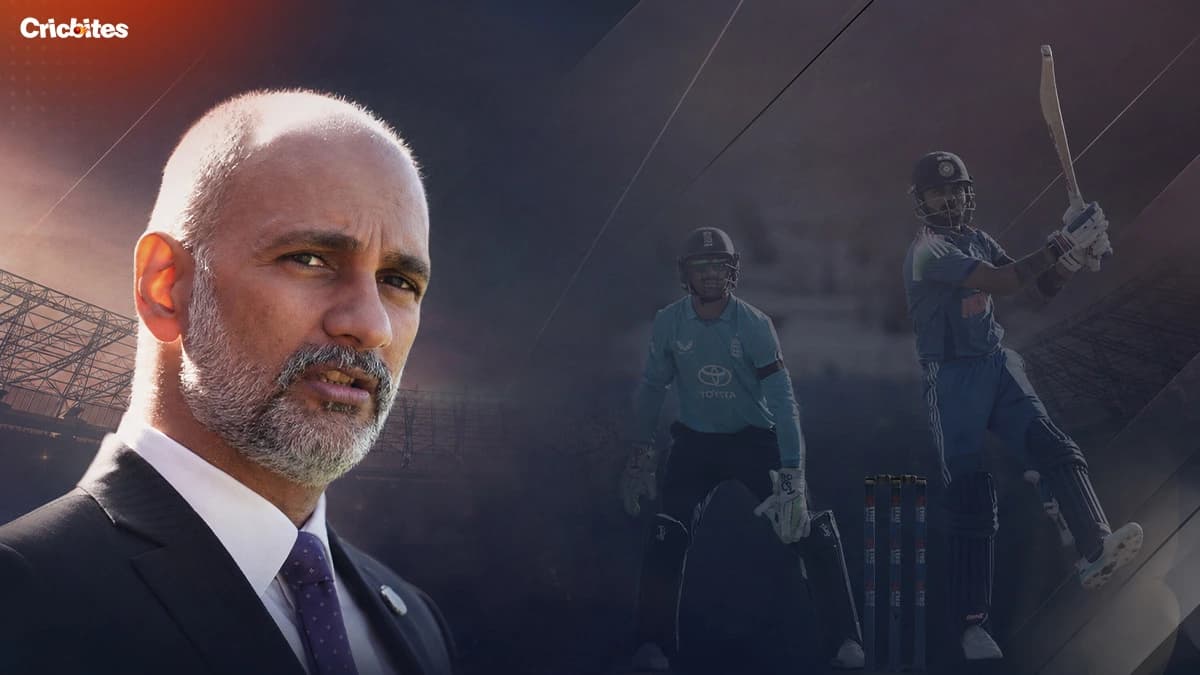
The future of One-Day Internationals has again come under the spotlight. But ICC CEO Sanjog Gupta believes the 50-over format still has a strong place in international cricket. Gupta has called for an end to “randomly scheduled” bilateral series, arguing that international cricket needs greater context, competition and purpose to remain sustainable in an era increasingly dominated by T20 cricket.
Sanjog Gupta Wants More Purpose in Bilateral Cricket
According to Gupta, the traditional model of scheduling bilateral cricket is becoming difficult to sustain. Especially without a larger narrative. He believes international cricket needs four key elements to attract and retain audiences: context, culture, competition and competitiveness.
The ICC chief executive argued that these factors can give bilateral cricket greater significance while helping boards justify the financial and operational investment required to stage international matches. For ODIs in particular, this could mean moving away from series that have little bearing on a wider competition and instead creating stronger narratives around the format.
ODIs Still Have a Future
Gupta stays positive about the future of ODIs. Even despite the increasing influence of T20 cricket. He believes the format can not only survive but also thrive if it is given a clearer identity and purpose. ODIs, according to Gupta, remain closely connected to the men’s and women’s ICC Cricket World Cups.
The challenge now is deciding what modern ODI cricket should be representing. The 50-over cricket is located in between Test cricket and its tradition of deep game and fast-paced entertainment offered by T20s. That position can be an advantage if the format is presented correctly, but it can also become a weakness when it is squeezed between the two more established identities. Gupta’s comments suggest that the ICC wants to address that issue rather than simply accept a decline in ODI relevance.
T20 Cricket Remains the Main Growth Engine
There is little doubt that T20 cricket has become the most powerful vehicle for expanding cricket into new markets. Gupta admitted that T20 is the ICC’s primary tool for global growth. Especially because its shorter duration makes it easier to introduce the sport to new audiences. Yet, he said that T20’s rise should not come at the expense of ODI or Test cricket.
The ICC’s focus on global growth recently, shows this broader strategy. Gupta has previously highlighted the enormous reach of major ICC events and the importance of adapting cricket to changing audience behaviour. For ODIs, that means finding ways to increase engagement without simply trying to copy the T20 model.
A Possible New Approach to ODI Scheduling
One possible solution has to be more deliberate scheduling around major ODI competitions. The Economic Times reported that discussions have taken place within the ICC about creating a dedicated window for 50-over cricket in the period leading up to the World Cup. Such an approach can give ODIs a more precise place in the international calendar. It could also potentially reduce clashes with major T20 leagues.
A stronger ODI calendar can also give teams more meaningful purpose. In contrast, rather than merely participating in bilateral series in isolation, the teams will have something meaningful to show for each individual match played – either a qualification route, rankings consequences or preparation for tournaments.
Growth, Not Just Survival
Gupta’s broader message is that cricket cannot afford to simply preserve existing structures. He has argued that the sport’s ambition should be growth rather than maintaining the status quo, warning that changing audience habits and increasingly fragmented attention require cricket to continually evolve.
That philosophy applies across all three international formats. For ODIs, evolution could include smarter scheduling, better competition, promotion and a clearer connection to World Cups. For Test cricket, Gupta has similarly called for stronger narratives, improved scheduling and greater investment in presentation and marketing.
What Gupta’s Vision Means for ODI Cricket
Sanjog Gupta’s comments do not suggest that the ICC is preparing to abandon ODIs. Instead, they point towards a try to redefine the format. The challenge will be turning that vision into a practical international calendar. Member boards control much of bilateral scheduling, while broadcasters, players, domestic leagues and commercial interests all influence when and where matches are played.
If those competing interests can be balanced, ODIs could remain an important part of international cricket. The message from the ICC leadership is therefore clear: ODIs do not necessarily need fewer matches — they need more meaningful matches. With the right context, competitive balance and stronger narratives, the 50-over format could continue to command an important place in cricket’s future. Even as T20 cricket expands globally.
For Cricbites readers, the coming years could be important in determining whether ODI cricket simply survives between Tests and T20s or successfully reinvents itself as a format with its own distinct identity.