
Loading…

Jason Gillespie Names ‘Insult’ By PCB As Main Reason For Quitting As Pakistan Test Coach
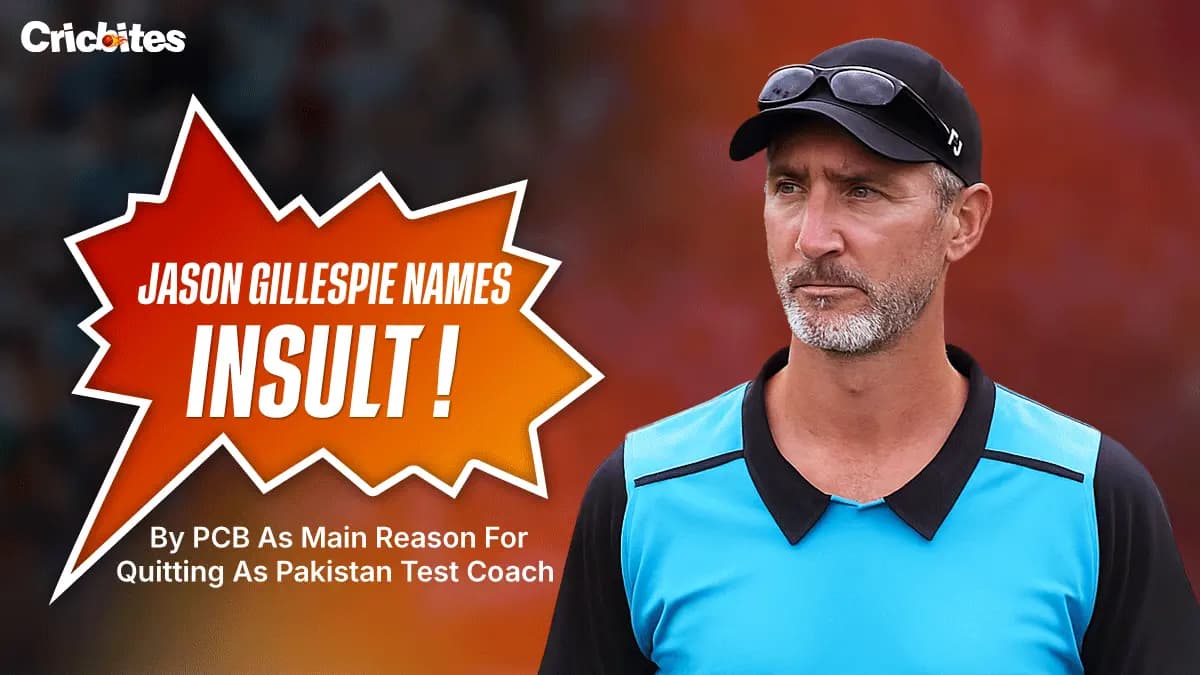
Jason Gillespie’s tenure as head coach of Pakistan’s red-ball team lasted only nine months, and it ended in a rather unfortunate manner. The former Australian fast bowler expressed his disappointment and embarrassment regarding how certain matters were handled; in fact, he didn’t hesitate to criticize the Pakistan Cricket Board (PCB). The main problem arose when the PCB removed senior assistant coach Tim Nielsen without informing Gillespie. This decision shocked him and eroded his trust. This sudden move led Gillespie to decide to resign from his position. He stepped down with embarrassment just before South Africa’s tour of Pakistan. The entire episode highlights poor communication and planning, which ultimately led to Gillespie’s departure.
High Expectations, Harsh Reality
Jason Gillespie took over as Pakistan’s Test coach with high hopes and a clear plan. He is calm, experienced, and possesses a deep understanding of fast bowling and Test cricket. The Pakistan Cricket Board (PCB) appointed him to bring discipline, structure, and long-term thinking to Pakistan’s red-ball team. But soon, problems began to emerge. Gillespie lacked clarity regarding his authority and responsibilities. Decision-making within the board seemed disorganized, and there was a lack of coordination in communication between the PCB and the coaching staff. Nevertheless, Gillespie persevered. He focused on the players, fostered team spirit, and tried to create a positive environment.
The Moment That Changed Everything
The situation worsened when the PCB removed senior assistant coach Tim Nielsen from the Test setup. The shock wasn’t just about the decision itself, but also about how it was handled. The PCB removed Nielsen without informing Gillespie beforehand, even though Nielsen was a key member of the red-ball coaching team. Gillespie later stated that he learned about the decision indirectly, which left him feeling embarrassed and humiliated. As head coach, he believed he should have been consulted about such a significant change to his staff. Being left out of the process made him feel disrespected in front of the players and his colleagues. This was a serious matter for Gillespie. He described the incident as “humiliating” and indicated that the board did not value his role.
Why Gillespie Decided to Step Down
Following the Nielsen incident, Gillespie reflected on his position. He realized that working in such an environment would prevent him from performing his job effectively. Coaching the national team required trust, open communication, and respect – qualities he felt were lacking. He explained that his decision wasn’t about money, results, or personal ambition. It was about professional integrity. Gillespie believed that if the head coach was excluded from crucial decision-making, the role became meaningless. Staying on would compromise his credibility and self-respect. Therefore, he resigned just before Pakistan’s crucial Test tour of South Africa.
Bad Timing, Bigger Consequences
The timing has made things even worse. Pakistan is about to play a challenging Test series in South Africa, one of the toughest places to tour. Such a series requires stability, meticulous planning, and strong leadership. Gillespie’s last-minute departure has left the players suddenly without a head coach for red-ball cricket. The coaching setup appears unstable. Many experts believe this disruption could negatively impact the team’s preparation and performance during the tour.
A Familiar Story in Pakistan Cricket
Sadly, this is not a new story. Several foreign coaches in Pakistan have faced similar problems before – unclear roles, interference, and abrupt decisions. Many have left their jobs prematurely or been dismissed without any long-term planning. Gillespie’s comments have once again highlighted a recurring pattern: short-sighted thinking and poor communication. Instead of focusing on consistent performance, the board often makes hasty changes that create instability. This history makes top foreign coaches hesitant to take on jobs in Pakistan.
Reactions from Fans and Experts
Following Gillespie’s comments, reactions poured in from all sides. Former players, experts, and fans largely supported him. Many praised him for being honest rather than remaining silent. Experts commented that Pakistan has immense talent, but poor management often holds it back. Fans expressed their frustration on social media, questioning why the PCB repeatedly makes the same mistakes. Gillespie’s remarks carry even more weight because he is known as an honest and professional individual.
Gillespie’s Reputation Remains Strong
Despite the controversy, Gillespie’s image in world cricket remains strong. His coaching work at various levels is still highly respected. Most people believe that his resignation demonstrated courage, not weakness. By choosing self-respect over compromise, Gillespie set a clear standard for professional conduct.
What This Means for Pakistan Test Cricket
Gillespie’s resignation has left the Pakistan Test team in a precarious position. Finding a new coach quickly will be challenging, especially given the board’s already tarnished image with foreign coaches. This incident raises a crucial question: Is the PCB prepared for long-term Test planning? Without stable leadership, Pakistan’s red-ball cricket risks losing its way, at a time when it is already facing considerable global pressure.
More Than Just a Coach
This issue is far bigger than any one individual. It points to deep-seated problems of governance, transparency, and respect within Pakistan cricket. If these issues are not addressed, similar situations are bound to recur. Gillespie’s experience is both a warning and an opportunity for change.
Read More: Usman Khawaja Announces Retirement From International Cricket After SCG Ashes Test
Conclusion
Jason Gillespie’s resignation as Pakistan’s Test coach is a matter of self-respect and professional values. By describing the PCB’s actions as “disrespectful,” he has highlighted the need for trust and clear communication in modern cricket management. His short tenure ended in disappointment, but his candid remarks have shed light on long-standing issues.
FAQs: Frequently Asked Questions
Q1. Why did Jason Gillespie resign from Pakistan?
He resigned, saying that the PCB had given him a “sudden shock.” Gillespie said he had received “absolutely no information” from the PCB about Nielsen’s removal and felt it was “the last straw that broke the camel’s back.”
Q2. Did Jason Gillespie resign as Pakistan’s red ball coach over unmet demands?
According to reports, Gillespie said: “Aaqib Javed and the PCB forced me to resign from the head coach position of the Pakistan team because I was against the idea of dropping Babar Azam from the Test team against England. Aaqib Javed hates Babar Azam; he is on a mission to ruin Babar Azam’s career.
Q3. Did PCB deny replacing Jason Gillespie with Aaqib Javed as head coach?
The Pakistan Cricket Board (PCB) has dismissed reports claiming that former Pakistani fast bowler Aaqib Javed would replace Jason Gillespie as head coach across all formats. Earlier reports had suggested that Javed was set to take over from Gillespie because the latter was reportedly unwilling to coach in all formats.






Hello Readers! My name is Satyaki Das. I work as an SEO specialist and content writer at Cricbites.com and I have over 2 years of experience. I enjoy writing easy-to-read and engaging sports content, especially clear and helpful cricket stories for fans. I hope you enjoy my articles. Thanks for reading!