

Loading…
Rahul Dravid Debut, Biography, Stats, Net Worth, Wife, IPL Team, Records, Career
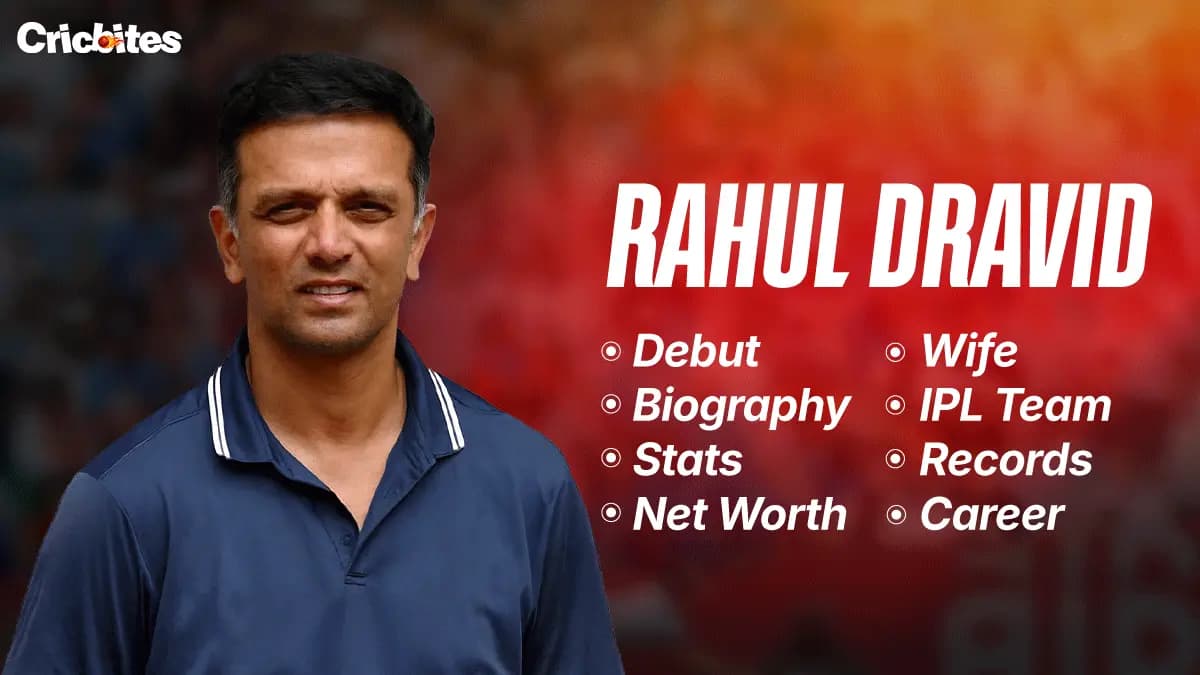
Rahul Sharad Dravid stood at the crease as if he knew exactly why he was there. He didn’t rush. He didn’t show off. He trusted his hands and his mind. For him, cricket wasn’t a spectacle; it was a duty. Years of playing on difficult pitches, facing spinning balls, and enduring long days in the field had forged him into a batsman others could rely on. When there was noise on the field, he brought calm. When the game demanded resilience, he stood firm. People called him “The Wall.” This nickname wasn’t earned through theatrics. It was earned through consistent performance, unwavering resolve, and an unyielding refusal to get out.
Early Life and Biography
Rahul Dravid was born on January 11, 1973, in Indore, Madhya Pradesh. He grew up in a family where education and discipline were valued. There was no pressure on him to play cricket; it came naturally to him. He took to it seriously, as if he understood from a young age that talent requires discipline. He became a right-handed batsman who valued correct technique. His shots were straight. His defense was solid. He occasionally bowled right-arm off-spin, but bowling was never his main focus. Batting was his craft, and he pursued it diligently like a true professional.
As a child, he learned to bat for long periods. He learned to respect the ball. He learned that staying at the crease wasn’t passive; it required intent. These lessons stayed with him. They shaped him into the cricketer he became.
Biography Details
| Attribute | Information |
|---|---|
| Full Name | Rahul Sharad Dravid |
| Date of Birth | 11 January 1973 |
| Age | 52 years (as of 2025) |
| Birthplace | Indore, Madhya Pradesh, India |
| Nationality | Indian |
| Role | Batsman (Top-order) |
| Batting Style | Right-hand bat |
| Bowling Style | Right-arm off break (occasional) |
| Domestic Team | Karnataka (also played for Kent, Scottish Saltires, Royal Challengers Bangalore, Rajasthan Royals, Marylebone Cricket Club) |
| International Team | India |
| Marital Status | Married |
| Wife | Vijeta Pendharkar (married 4 May 2003) |
| Net Worth | Approx. $40 million (~₹320 crore) (including cricket earnings, coaching, endorsements) |
Career Batting Stats, Bowling Stats & Fielding Stats
Right-Handed Batsman Stats
| Format | Match | Innings | NO | Runs | HS | AVG | BF | SR | 100s | 50s | 4s | 6s |
|---|---|---|---|---|---|---|---|---|---|---|---|---|
| Test (1996-12) | 164 | 286 | 32 | 13288 | 270 | 52.3 | 31258 | 42.5 | 36 | 63 | 1654 | 21 |
| ODI (1996-11) | 344 | 318 | 40 | 10889 | 153 | 39.2 | 15284 | 71.2 | 12 | 83 | 950 | 42 |
| T20I (2011) | 1 | 1 | 0 | 31 | 31 | 31.0 | 21 | 147.6 | 0 | 0 | 0 | 3 |
| IPL (2008-13) | 89 | 82 | 5 | 2174 | 75* | 28.2 | 1882 | 115.5 | 0 | 11 | 268 | 28 |
Right Arm off Spin Bowler Stats
| Format | Match | Innings | B | Mdn | Runs | W | BB | Econ | AVG | SR | 4W | 5W |
|---|---|---|---|---|---|---|---|---|---|---|---|---|
| Test (1996-12) | 164 | 5 | 120 | 4 | 39 | 1 | 1/18 | 1.95 | 39.0 | 120.0 | 0 | 0 |
| ODI (1996-11) | 344 | 8 | 186 | 1 | 170 | 4 | 2/43 | 5.48 | 42.5 | 46.5 | 0 | 0 |
| T20I (2011) | 1 | – | – | – | – | – | – | – | – | – | – | – |
| IPL (2008-13) | 161 | – | – | – | – | – | – | – | – | – | – | – |
Fielding Stats
| Format | Catches | Run-Outs | Stumpings |
|---|---|---|---|
| Test (1996–12) | 210 | 8 | 0 |
| ODI (1996–11) | 196 | 14 | 14 |
| IPL (2008–13) | 18 | 8 | 0 |
Domestic and International Debut
Dravid played domestic cricket for Karnataka. The team trusted him in the top order, and he justified that trust with runs and consistent performances. He wasn’t a quick scorer; he built his innings slowly, brick by brick. His international debut came in 1996. He played his first Test against England at Lord’s on June 20th. On the same tour, he played his first ODI against Sri Lanka on April 3rd. The atmosphere was electric. The pressure was immense. He looked ready.
From the outset, it was clear that Test cricket suited him best. He played the longer format with intelligence. He left the ball well. He waited for the bowlers to make mistakes. Over time, he became the backbone of India’s batting lineup. Dravid played international cricket from 1996 to 2012. He represented India in Tests, ODIs, and one T20 International. When he retired, he did so without any fanfare. The job was done.
IPL Career and Teams
When the Indian Premier League began in 2008, Dravid was already a senior player in Indian cricket. He played for Royal Challengers Bangalore from 2008 to 2010. Later, he played for Rajasthan Royals from 2011 to 2013. In the IPL, he played as a top-order batsman. He provided stability and experience to the team. He wasn’t explosive, but he was reliable. Teams valued his calm demeanor and understanding of the game.
His IPL career was respectable, but it was never the main part of his legacy. This format demanded quick scoring, while Dravid offered control. He adapted himself as much as he could, but his greatest strengths remained in the longer formats of the game.
Playing Style and Strengths
Rahul Dravid batted right-handed and relied more on his defense than his instincts. He played the ball close to his body. He kept his head still. He let the ball come to him. His greatest strength was his concentration. He could bat for hours without losing focus. Bowlers tried everything. Pace, swing, spin. He responded with patience. He didn’t chase the ball. He waited.
He also occasionally bowled right-arm off-spin. This was never a major part of his role. In the field, he was outstanding. He took over two hundred catches in Test cricket, despite not being a wicketkeeper. He had very safe hands. His movements were very precise. Dravid’s game was built on reliability, not style. When things went wrong, his teammates trusted him to hold things together. Opponents knew they would have to work hard to earn his wicket.
Records and Achievements
Rahul Dravid played 164 Test matches for India. He scored 13,288 runs and hit 36 centuries. In One Day Internationals, he played 344 matches and scored 10,889 runs with 12 centuries. He also played one T20 International match.
These statistics were the result of years of consistent performance. He played in diverse conditions and on different continents. He scored runs both at home and away. He even opened the batting when needed. He also batted lower down the order when the team required it.
He was chosen as a Wisden Cricketer of the Year in 2000. In 2004, he was named the ICC Cricketer of the Year. He captained India in both Tests and ODIs during challenging times.
Above all, he came to be known as ‘The Wall’. This wasn’t because he was unbreakable, but because it took considerable time and effort to breach his defense.
Net Worth and Earnings
Rahul Dravid’s net worth is estimated to be approximately forty million US dollars, which is roughly equivalent to three hundred and twenty crore Indian rupees. He earned this money through years of playing international cricket, IPL contracts, and later, coaching roles.
He earned money from BCCI contracts, match fees, and endorsements. Even after retirement, he continued to contribute to the sport as a coach and mentor. These roles not only increased his income but also enhanced his influence.
His financial success came after his cricket career. It was earned steadily and through hard work, without any ostentation or shortcuts.
Personal Life
Rahul Dravid is married to Vijeta Pendharkar. He keeps his personal life private and stays away from the limelight off the field. Those who know him praise his humility and discipline. He lives a simple life; fame hasn’t changed him, nor has success led him astray. After retiring as a player, he dedicated his time to coaching young cricketers. He worked with the India Under-19 teams, India A, and later the senior national team. He continued to serve the game with the same dedication and seriousness he displayed as a player.
Read More: Sir Richard Hadlee Debut, Biography, Stats, Net Worth, Wife, IPL Team, Records, Career


Hello Readers! My name is Satyaki Das. I work as an SEO specialist and content writer at Cricbites.com and I have over 2 years of experience. I enjoy writing easy-to-read and engaging sports content, especially clear and helpful cricket stories for fans. I hope you enjoy my articles. Thanks for reading!