

Loading…

Scotland, Netherlands Raise Concerns Over ICC’s New ODI World Cup Format
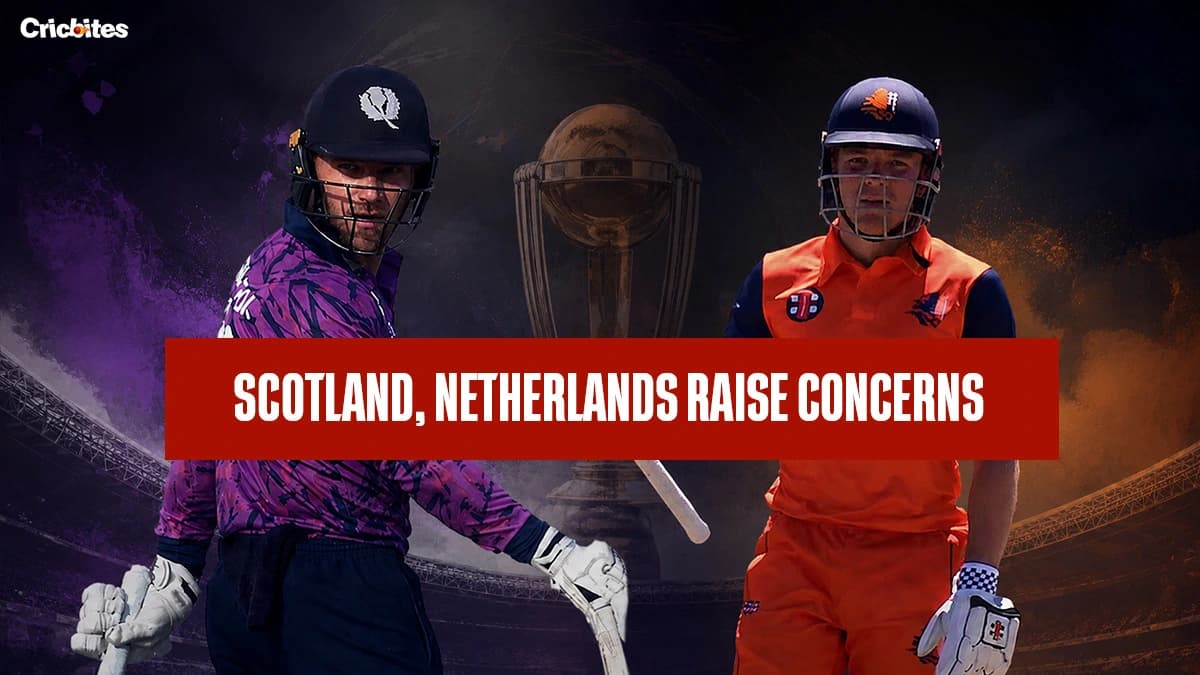
On August 10, Cricket Scotland and the Royal Dutch Cricket Association (KNCB) expressed disappointment over the International Cricket Council’s structural changes to the Men’s Cricket World Cup format and qualification pathway.
The two boards argue that the short-notice changes, introduced less than 18 months before the tournament, undermine the progress and development of Associate Member cricket.
“Cricket Scotland and the Royal Dutch Cricket Association (KNCB) are deeply disappointed by the International Cricket Council’s recent decision to implement significant structural changes to the ICC Men’s 50-over World Cup qualification pathway and tournament format with less than 18 months until the competition begins,” the two boards said in a joint statement.
ICC Introduces New World Cup Format
The ICC revealed the changes in July as part of a wider update to the formats of its two men’s World Cups. The changes bring in ‘Super Series’ and ‘Super 7’ stages at next year’s 50-over World Cup.
The tournament will continue to feature 14 teams, as planned earlier. However, the three teams at the bottom of the rankings will now begin in a ‘Super Series’ stage. Only the side finishing first will move into the main 12-team group stage.
From the main group stage, the top three teams in each group and the next best team across both groups will move into the new ‘Super 7’ stage.
Concerns Over Consultation
Scotland and the Netherlands warned that the new format could hurt the development of Associate Member cricket.
“These changes represent a setback to Associate Member cricket and risk undermining the progress made in recent years to grow the global game.”
The two European Associate Member boards also raised concerns about when the changes were announced and how much consultation took place before the decision.
“Decisions of this significance, particularly those directly affecting Associate Members, should be made clearly following meaningful consultation and with sufficient notice for affected Members to understand and respond to the implications.
The timing of these changes, with less than eighteen months until the tournament, has given affected Members limited opportunity to contribute to the process or adapt. We believe greater engagement with Associate Members would have supported a more effective and collaborative approach and help maintain confidence in the qualification pathway,” the joint statement added.
They also argued that changing the qualification system midway through a cycle can create problems for teams and players.
“Members and their players invest years in preparing for World Cups, and confidence in those pathways depends on them not changing part-way through a qualification cycle without consultation. Changing those structures at short notice creates significant uncertainty, disrupts planning, and places additional operational and financial pressure on organisations that are already operating with limited resources,” the statement further said.
Associate Members Seek Greater Opportunities
Both Scotland and the Netherlands have stressed that qualifying for the World Cup is particularly important for Associate Members.
“The opportunity to compete at a World Cup provides Associate Members with a unique competitive opportunity to drive investment, inspire players, attract commercial partners and government support, and create moments that capture the imagination of supporters. Some of the most memorable moments in ICC tournaments have come when Associate Members have challenged, and in some cases defeated, Full Members on the world stage.
Those performances have always reinforced the principle that success is earned on the field. Our players work incredibly hard with limited resources to earn these opportunities and deserve respect and for their efforts to be rewarded.”
They also said giving Associate Members a genuine chance to reach major tournaments is necessary for cricket’s worldwide growth.
“Leaders in cricket have consistently spoken about their ambition for the sport to become truly global. Providing meaningful opportunities for emerging nations to qualify for and compete at major events is fundamental to achieving that ambition. Decisions that reduce or limit those opportunities slow the progress being made to expand the game’s reach and appeal and runs counter to those ambitions,” the joint statement added.
Cricket Scotland and the Royal Dutch Cricket Association believe that the sport can only truly expand when emerging nations have guaranteed and stable paths to the world stage, rather than facing sudden structural changes that limit their opportunities.
Follow Cricbites for the latest cricket updates, match schedules, player news, records, rankings and expert insights from around the world.