
Loading…
Shane Warne Debut, Biography, Stats, Net Worth, Wife, IPL Team, Records, Career
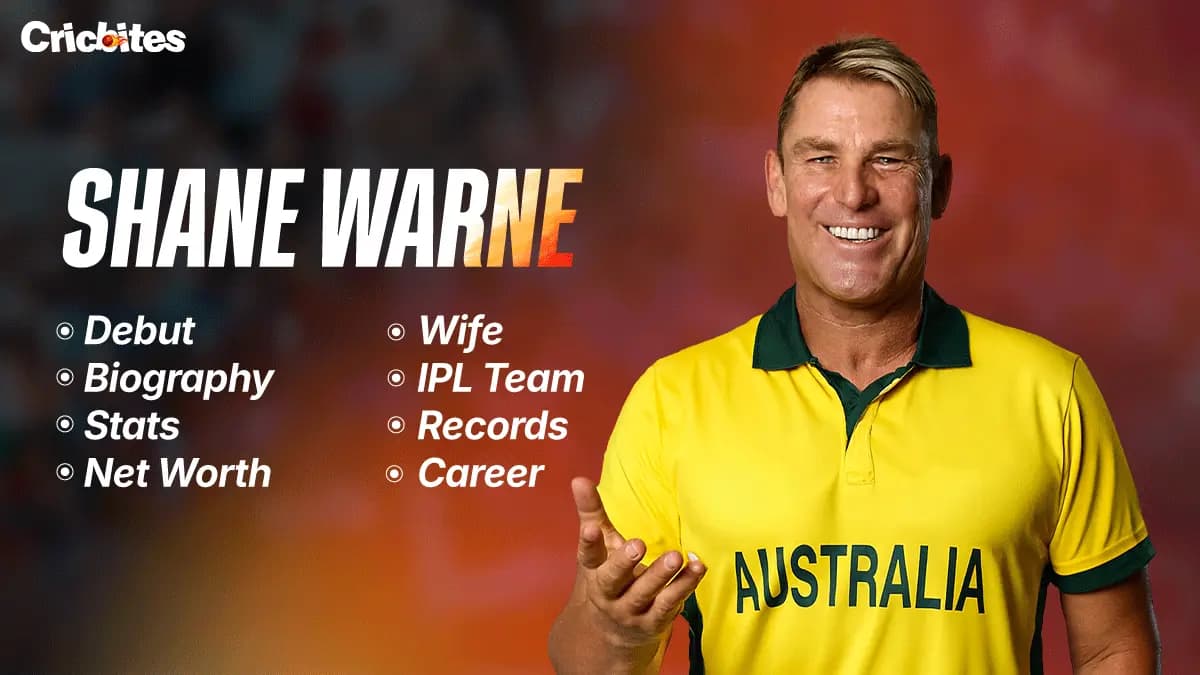
Shane Keith Warne did not come to cricket as a guest who would knock and wait. He entered like a storm that knew its target. The act of the ball bursting through his fingers was drama. It was theatre. It was also deep craftsmanship. In an era where speed and brute force were in vogue, Warne brought back the mystery. He made spin bowling like cinema again. Not a background score, but the main scene. His career is not just a list of wickets and numbers. It is a long story about the power of new discoveries, courage and faith in an old art.
Early Life and Biography
Born on September 13, 1969, in Ferntree Gully, Victoria, Shane Warne was born very different from the legends he would later become. He was not a talented player who decided to rule cricket from childhood. He played football. He tried different paths. Cricket came, stayed and gradually began to revolve around him. He bowled leg spin in a country that lacked patience. Australia preferred pace. It relied on hard lengths and strong men. Leg spin was considered dangerous, unreliable and even old-fashioned. Warne, with his round face and unglamorous beginnings, did not seem revolutionary. But revolutions often begin quietly.
Domestic and International Debut
Warne’s domestic cricket with Victoria gave him room to fail and learn. First-class cricket tested his patience. The ball didn’t always turn. The captain didn’t always trust him. Yet the art became sharper. When he made his Test debut against India on 2 January 1992, he was still a work in progress. The early matches were unremarkable. Doubts were born. Then came the moment that rewrote the concept of cricket. In 1993, Mike Gatting wasn’t just spinning the ball. He was ushering in an era. From that point on, Warne’s place in the Australian team was not in question. It was expected.
Biography Details
| Attribute | Information |
|---|---|
| Full Name | Shane Keith Warne |
| Date of Birth | 13 September 1969 |
| Age / Age at Death | 52 (died 4 March 2022) |
| Birthplace | Upper Ferntree Gully, Victoria, Australia |
| Nationality | Australian |
| Role | Bowler (leg-spin specialist) |
| Batting Style | Right-handed |
| Bowling Style | Right-arm leg break / leg break googly |
| Domestic Teams | Victoria (Australia), Hampshire (England), Rajasthan Royals (IPL), Melbourne Stars (Big Bash) |
| International Team | Australia (1992–2007) |
| Marital Status | Divorced |
| Wife | Simone Callahan (married 1995–2005) |
| Net Worth (at death) | Approx. US $50 million |
Career Batting, Bowling & Fielding Stats
Batting (Right -Handed)
| Format | Mat | Inns | NO | Runs | HS | Ave | BF | SR | 100s | 50s | 4s | 6s |
|---|---|---|---|---|---|---|---|---|---|---|---|---|
| Tests | 145 | 199 | 17 | 3154 | 99 | 17.32 | 5470 | 57.65 | 0 | 12 | 353 | 37 |
| ODIs | 194 | 107 | 29 | 1018 | 55 | 13.05 | 1413 | 72.04 | 0 | 1 | 60 | 13 |
| FC | 301 | 404 | 48 | 6919 | 107* | 19.43 | – | – | 2 | 26 | – | – |
| List A | 311 | 200 | 41 | 1879 | 55 | 11.81 | – | – | 0 | 1 | – | – |
| T20s | 73 | 32 | 10 | 210 | 34* | 9.54 | 228 | 92.10 | 0 | 0 | 15 | 7 |
Bowling (Right-arm leg break / leg break googly)
| Format | Mat | Inns | Balls | Runs | Wkts | BBI | BBM | Ave | Econ | SR | 4w | 5w | 10w |
|---|---|---|---|---|---|---|---|---|---|---|---|---|---|
| Tests | 145 | 273 | 40705 | 17995 | 708 | 8/71 | 12/128 | 25.41 | 2.65 | 57.4 | 48 | 37 | 10 |
| ODIs | 194 | 191 | 10642 | 7541 | 293 | 5/33 | 5/33 | 25.73 | 4.25 | 36.3 | 12 | 1 | 0 |
| FC | 301 | – | 74830 | 34449 | 1319 | 8/71 | – | 26.11 | 2.76 | 56.7 | – | 69 | 12 |
| List A | 311 | – | 16419 | 11642 | 473 | 6/42 | 6/42 | 24.61 | 4.25 | 34.7 | 20 | 3 | 0 |
| T20s | 73 | 71 | 1548 | 1863 | 70 | 4/21 | 4/21 | 26.61 | 7.22 | 22.1 | 1 | 0 | 0 |
Fielding Stats
| Format | Ct | St |
|---|---|---|
| Tests | 125 | 0 |
| ODIs | 80 | 0 |
| FC | 264 | 0 |
| List A | 126 | 0 |
| T20s | 18 | 0 |
Career
Shane Warne’s international career spanned Tests and ODIs, but the soul of his work lay in Test cricket. He played 145 Tests and took 708 wickets. These are not just numbers. They are chapters. Each series added layers to his legend. He pulled Australia out of trouble. He broke partnerships that seemed stagnant. He turned matches around on days when pitches looked lifeless. His ODI career included 293 wickets, but even there, his value was not in control. Warne did not bowl to restrict. He bowled to win. Over the years, opponents prepared extensively, yet remained uncertain. That uncertainty was his greatest weapon.
IPL Career and Teams
When the Indian Premier League started in 2008, it felt like a youthful format that was steeped in old understandings. Shane Warne responded. With Rajasthan Royals, he was not just a player. He became a leader and a mentor. Against star-studded teams, Warne built confidence. He led a team that was not expected to win and led it to its first IPL title. It was not an old memory. It was consistency. Warne read the modern game quickly. He adapted his thinking. In the IPL, his legacy was not just wickets, but a confidence that taught young players, especially spinners, to believe in flight and courage.
Playing Style and Strengths
Warne’s bowling was based on deception, not tricks. He used flight as an invitation. He used drift as a suggestion. The leg break was his foundation, the googly his punctuation. Then came the flipper, the top spinner, subtle changes in release that batsmen felt but did not understand. He played the batsman as much as the pitch. He understood fear, impatience and pride. His batting, even lower down the order, had moments of stubborn resistance, including a famous Test score of 99. On the field, he was reliable, alert and deeply invested in every game. For Warne, cricket was total immersion.
Records and Achievements
At one point he had the most Test wickets in history, seven hundred and eight. More than a thousand international wickets in various formats established Warne in his own right. In 2000, Wisden named him one of the five cricketers of the century, a rare honour that spoke more about influence than numbers. But perhaps his greatest achievement was cultural. He brought leg spin back into the mainstream. Young bowlers across the continent began to try wrist spin again. Coaches were appointed. Batsmen gained a new respect. Warne didn’t just break records. He changed direction.
Net Worth and Earnings
Shane Warne’s estimated net worth, based on public valuations, was around $50 million USD. This wealth came from international cricket contracts, IPL roles, endorsements and later media work. Yet his value went beyond money. He remained a visible figure even after retirement. Commentary, mentoring and analysis kept him in touch with the game. Warne understood the market, but he also understood the legacy. His earnings reflected not only his success on the field, but also his ability to remain relevant.
Personal Life
Warne married Simon Callahan in 1995 and divorced in 2005. They had three children, Jackson, Brooke and Summer. His personal life was often under public scrutiny. Fame magnified everything. Both victories and controversies came to the fore. Warne never pretended to be perfect. He lived loudly, sometimes chaotically. He died on 4 March 2022 in Ko Samui, Thailand, at the age of 52. The news felt unreal. The absence of such a presence seemed impossible to imagine.
Also Read: Ricky Ponting Debut, Biography, Stats, Net Worth, Wife, IPL Team, Records, Career
Conclusion
The story of Shane Warne is not one of neat arcs or quiet exits. It is vast, flawed, brilliant and unforgettable. He took an ancient art and gave it a modern voice. He made spin bowling exciting again. He played cricket as a show, but never without substance. Even after the statistics are quoted and the footage is re-shown, the feeling that remains is that. The feeling that something magical can happen when he has the ball. In cricket, that feeling is rare. Shane Warne gave it to the world time and time again.
FAQs: Frequently Asked Questions
Q1. When was Shane Warne born?
Shane Warne was born on 13 September 1969.
Q2. Where was Shane Warne born?
He was born in Ferntree Gully, Victoria, Australia.
Q3. When did Shane Warne make his international debut?
Warne made his Test debut against India in January 1992.



Hello Friends! My name is Harshil Raval. I work as an SEO Lead at Cricbites.com. I have over 4 years of experience. I am very passionate about writing about sports, especially cricket. I try to write in very simple and clear terms so that everyone can understand, even young readers. I enjoy sharing interesting match stories, player news, and helpful cricket information for fans. Writing about cricket makes me happy, and I always try to make my articles interesting and easy to read. I hope you enjoy reading my stories. Thank you very much for your support!