
Loading…

South African Cricket Governance Battle Takes Backseat as World Cup Takes Centre Stage
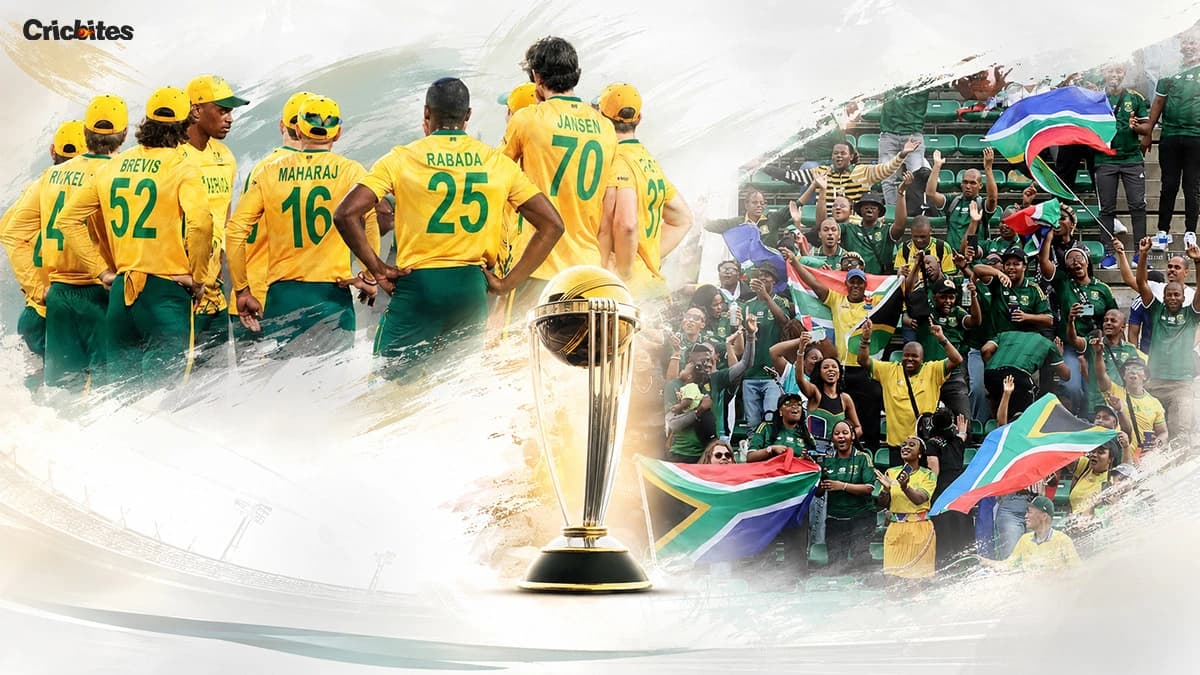
The simmering governance battle inside Cricket South Africa (CSA) has been temporarily placed on hold as focus shifts toward organizing the 2027 ICC Men’s Cricket World Cup.
Presidents of CSA’s 15 provincial affiliates are pushing to reduce the number of independent directors on the organisation’s board. Under the current constitution, the board must have 8 independent and 5 non-independent members, with an independent director serving as chair.
Provincial Presidents Seek Greater Control
The non-independent directors are usually provincial presidents, and some of them want to reduce the gap between the 2 groups. Others want provincial presidents to make up most of the board. Their push for greater representation reflects a desire to return to the old system, when there were no independent directors. That system ended in February 2013.
Reducing the number of independent directors would likely raise concerns among sponsors, governance experts and cricket supporters. They could fear that giving provincial presidents more influence would weaken the governance reforms that have helped South African cricket move forward.
The provincial presidents are pushing for the change because they have lost influence within the game and want to regain some of the power they once held.
Provincial Influence Has Declined
The provincial presidents have little influence over the SA20, despite the league’s success. Their position has also weakened after 2 of their provinces were placed under administration, further reducing their influence within South African cricket.
They have struggled to accept this loss of influence and appear to believe that regaining control will restore their standing in the game. However, such a power struggle could ultimately damage South African cricket.
Outgoing Gauteng president Earl Glennistor, who sits on CSA’s board as part of the Members’ Council, the group of provincial presidents, said he was “not pushing” for a return to the old system.
However, he said the idea was already being discussed when he joined the Members’ Council.
“When I got to the Members’ Council in May 2020, it was there already,” he said.
The key question is whether he supported the proposal at the time.
“I’m torn between a majority of independent or non-independent directors,” Glennistor said. “If we look at other federations in our country, like rugby and soccer, one is very good and one is very bad. But both of them are controlled by non-independent directors. So it really depends on who’s on the board.”
Rugby and Football Provide Different Examples
When compared against other federations for retrospective analysis, the South African Rugby Union recorded losses of USD1.9-million in 2025. That was USD300,000 more than the South African Football Association.
However, in almost every other area, rugby in the country is in much better shape than football.
The Springboks have won 4 of the 9 men’s World Cups they have played. No other team has won the tournament as many times, despite several sides having appeared in all 11 editions.
Bafana Bafana have gone beyond the group stage only once in their 4 men’s World Cup appearances. They have also failed to qualify 5 times.
Reaching the football World Cup finals is far harder than making the rugby tournament. But the difference in the overall health of the 2 sports is clear.
Rugby has its own political fights and arguments over money, while football is weighed down by corruption and repeated organisational problems. Rugby is deeply professional. Football is not.
Provincial Cricket Faces Financial Problems
Below the international level, cricket is in a worse state than football. Of the 15 provincial affiliates, only Northerns, Gauteng and KwaZulu-Natal, which run the Titans, Lions and Dolphins, are financially stable.
The other 12 provinces, including teams based at famous grounds such as Newlands and St George’s Park, depend on CSA to keep going.
That is why the provincial presidents say they want more influence over how the game is managed. Yet they are also responsible for many of the problems affecting cricket in the provinces.
Giving them more seats on the CSA board would, in the eyes of many inside and outside the game, create even more problems.
Debate Over Independent Directors
Even so, there is a case for saying that CSA’s mostly independent board makes decisions for the wider good of the organisation while following its financial duties.
That works from the top. At provincial level, where many feel pushed aside, it is a different story.
“A strong CSA means strong affiliates,” one provincial president said. “Strong affiliates means strong clubs. It filters all the way down. Cricket in this country is not made up of the people in the Proteas. It’s made up of every single person who supports the Proteas.”
A veteran administrator said, “The biggest problem is the overwhelming position taken by independents. The provincial presidents feel their voices are lost in the system. And that less and less is being spent on actual cricket, which seems to be taking a smaller role because everything is concentrated in how the finances look. But they have to understand that without finances you can’t sustain yourself.”
They also need to accept that cricket is no longer the sport and business it once was, as an insider explained.
“The world game has changed dramatically. So much so that the South Africa under-19 team is a better platform for finding Proteas players than provincial cricket; certainly in division two and maybe even in division one. You have to play in the SA20 to be able to play white-ball cricket for South Africa,” the insider said.
“We’re living in a totally different environment compared to 5 or 10 years ago. Yet the Members’ Council are adamant that we must have the old status quo. That’s gone,” he added.
CSA’s Board Structure Changed After Scandal
CSA’s board had no independent directors until February 2013, when 5 independents joined 5 provincial presidents.
The change came after a scandal involving improperly declared bonuses worth USD555,000 paid to CSA by the IPL for South Africa’s successful hosting of the 2009 edition of the Indian tournament at short notice.
It took an even bigger crisis, CSA’s long list of failures under president Chris Nenzani and chief executive Thabang Moroe, to bring the board to its current structure. That change was made in June 2021.
“There’s no doubting that taking away the Members’ Council’s power has had massive positives,” an insider said. “One is that we’ve seen sponsorships come on board like never before. Yet these guys think they can go back to the old days and have their power. It’s scary,” the insider added.
September 26 Annual Meeting
CSA will hold its annual meeting on September 26. However, the proposal to return to the previous board structure will not be discussed or put to a vote at the meeting.
Provincial presidents within Cricket South Africa are pushing to reduce the number of independent board members, aiming to regain influence lost since governance reforms in 2021. While the internal power struggle threatens to destabilize the organisation, the push by provincial presidents to regain greater control is facing opposition.
Follow Cricbites for the latest cricket updates, match schedules, player news, records, rankings and expert insights from around the world.