

Loading…

The New Era of Test Cricket that Brought the Next Generation Into Focus
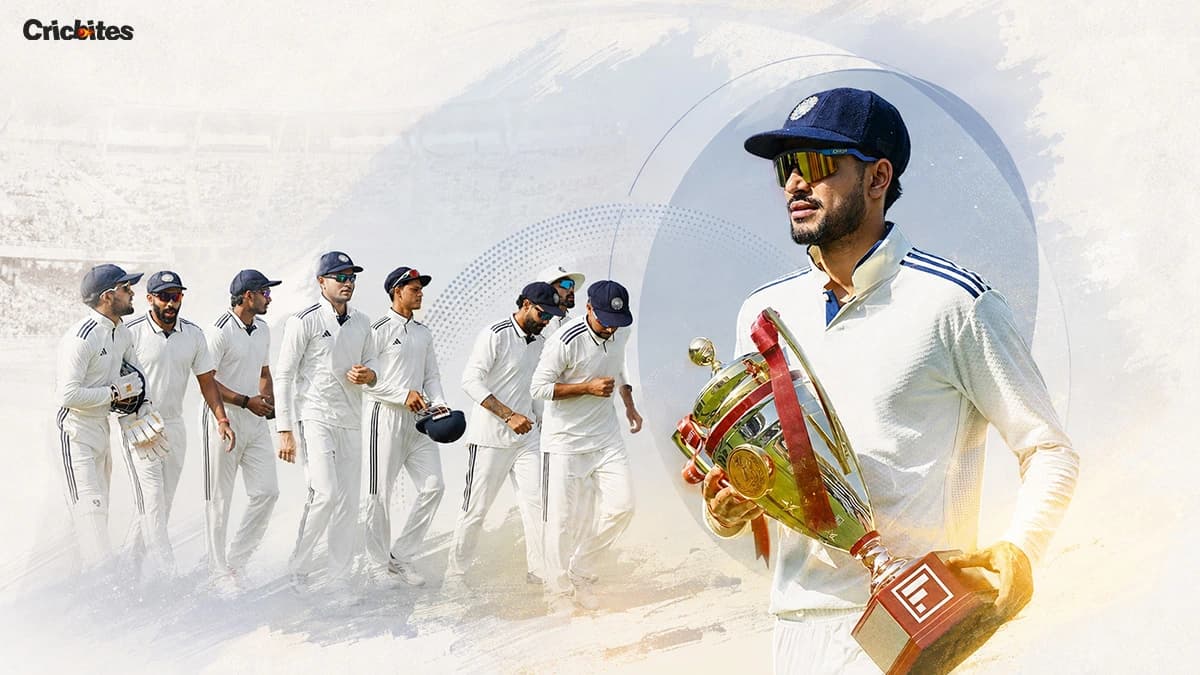
Test cricket has traditionally been the ultimate test of a cricketer’s talent, patience, temperament and flexibility. But the format is now starting an interesting new chapter. With many iconic players nearing retirement, teams are increasingly turning toward younger cricketers to take the future of red-ball cricket into their hands.
A generation of Test cricketers in transition
Test teams were constructed around established players, who might dominate international cricket for a decade or more, for years. Players like Virat Kohli, Steve Smith, Joe Root, Kane Williamson and Ben Stokes were the linchpins of their respective sides.
But currently the international cricket is going through a transition phase. Selectors are looking beyond reputation and more toward present form and adaptability and long-term potential. Younger players are being pushed to assume responsibilities much earlier.
For example, the recent change in India. The squad has brought in a few new faces, looking to replace established players who have moved on or are at the latter end of their careers. Gurnoor Brar, Manav Suthar and Harsh Dubey were among of the developing players getting a chance in India’s Test set-up, mentioned by the ICC.
The End of One Epoch Can Spawn Another
Another interesting example of transformation is to be found in England. The retirement of Ben Stokes from Test cricket and the resignation of head coach Brendon McCullum have essentially shut one chapter in England’s aggressive ‘Bazball’ era.
Joe Root reinstated as Test captain and Stephen Fleming new head coach. The idea is not simply to stop aggressive cricket but to combine its strengths with more flexibility and tactical discipline.
It might be a great chance for the younger English players. Take Harry Brook, for instance, who has already established himself as one of the most intriguing hitters of his age. He’s a big player for England’s future since he can score swiftly and still has a good Test record.
So, the new age could not be about the classic Test cricket or the current aggressive cricket, but a successful synthesis of the two.
What Next Generation Offers Test Cricket
“The new generation has grown up watching T20 cricket, ODI cricket and Test cricket simultaneously. Their attitude is so organically different from earlier generations.
| Area | Traditional Approach | Emerging Test Approach |
|---|---|---|
| Batting | Greater emphasis on patience | Patience combined with controlled aggression |
| Bowling | Longer spells and traditional plans | Greater variation and tactical flexibility |
| Fitness | Format-specific preparation | Multi-format fitness and workload management |
| Strategy | Established Test methods | Data-driven and adaptable tactics |
| Mindset | Risk avoidance | Calculated risk-taking |
| Development | Longer domestic apprenticeship | Earlier exposure to international cricket |
Australia is also looking to the future
Australia’s Test set-up is experiencing selection issues of its own. The recent displays have highlighted worries about the top order and the selectors looking at younger options.
One of the names being talked about is Cooper Connolly. The former Australia Under-19 captain has already shown his promise in domestic cricket and the white-ball game, while other young guns like as Oliver Peake, Campbell Kellaway and Sam Konstas are also in the mix as prospective future Test players.
That’s how rapidly things can shift in Test cricket. While the established stars may still have a role to play, new cricketers are being progressively groomed for international duty before a total reconstruction is needed.
The Basis Will Remain Domestic Cricket
The rise of franchise cricket has not rendered the strong domestic red-ball championships redundant.
In India’s Duleep Trophy, Australia’s Sheffield Shield and the English County Championship, young players have the chance to develop the abilities required for international test cricket.
Technical progress is still of considerable importance. Young batsmen need to learn how to face swing, seam, speed and spin and bowlers need to learn how to stay disciplined over extended stretches.
The latest batch of players coming via India’s domestic system is indicative of how crucial that route remains. The Test system in the country has also been handing out debuts as the selectors continue to look for individuals who might be long-term international contributors.
Conclusion
There is no question that test cricket is in trouble. Franchise leagues, scheduling demands, player workloads and shifting viewing preferences have posed tough issues about the viability of the model.
But the arrival of players like Manav Suthar, Devdutt Padikkal, Harry Brook and an increasing band of young Australian hopefuls gives grounds for optimism.
The next generation doesn’t have to play Test cricket precisely the way the previous generations did. They need to respect its principles, but also apply their own abilities, personalities and ideas to the format.
Actually, it could be the fascinating element of this new period. Test cricket is evolving but it is not static. Young cricketers are taking up the game’s hardest challenge and making it their own, shaping the future of the game.
Stay Updated With Cricbites
CricBites Read the latest Test cricket news, rising players, match analysis and cricket thoughts.