

Loading…

Wasim Akram Debut, Biography, Stats, Net Worth, Wife, IPL Team, Records, Career
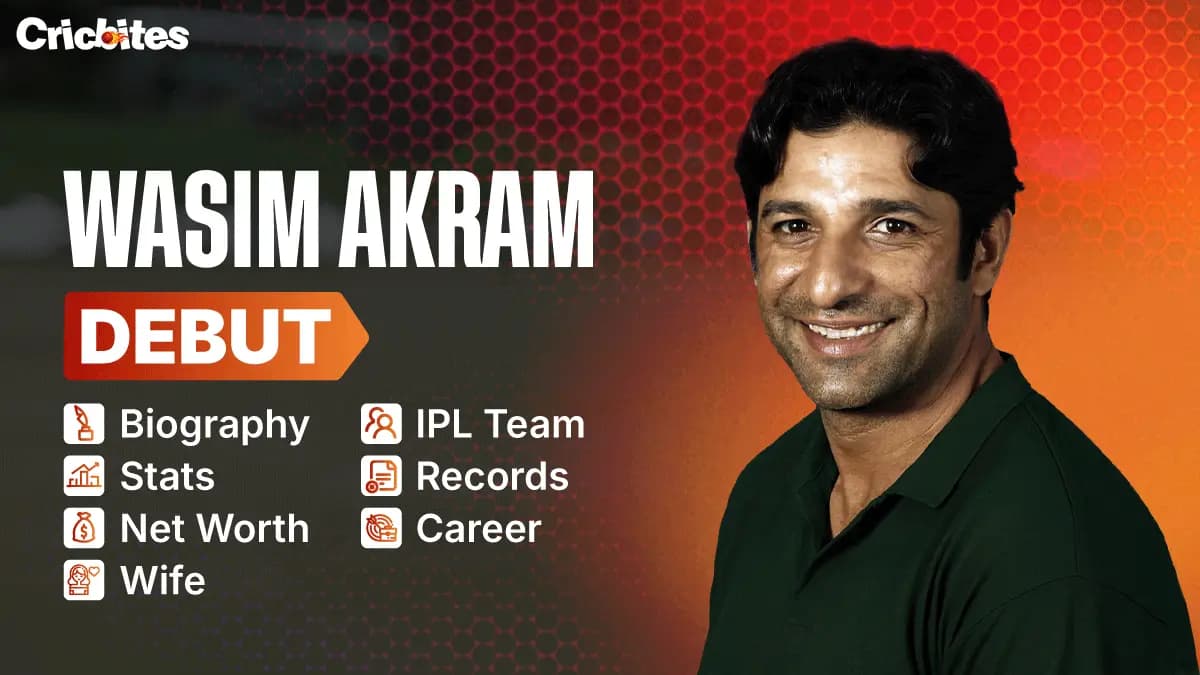
Wasim Akram was a left-arm fast bowler who played for Pakistan. He is considered one of the greatest bowlers of all time. He bowled with such pace and swing that batsmen found it difficult to face him. He could swing the ball both ways in the air, and he was a master of reverse swing when the ball got old. His yorkers were lethal. He targeted the base of the stumps with blistering pace, and batsmen often failed to defend against them. He took 414 Test wickets and 502 One Day International (ODI) wickets. He was the first bowler to take 500 ODI wickets. He played a crucial role in Pakistan’s 1992 World Cup victory. He was inducted into the ICC Cricket Hall of Fame. After retirement, he became a commentator and coach. He taught young bowlers the art of swing bowling. He is now in his sixties, but his name is still spoken with respect wherever cricket is played.
Early Life and Biography
Wasim Akram was born on June 3, 1966, in Lahore, Punjab, Pakistan. He is now in his sixties. He grew up in Lahore at a time when Pakistani cricket was on the rise. The country had produced fast bowlers before, but none quite like Wasim. Like most Pakistani boys, he learned to play cricket on the streets and fields of Lahore. He was naturally left-handed, and this set him apart. Left-arm fast bowlers are rare. Wasim was one of them, and he was special.
He bats left-handed and bowls left-arm fast. This combination is unusual. Most left-arm bowlers also bat left-handed, but bowling has always been Wasim’s strength. He could bat and scored useful runs lower down the order, but he was selected for his bowling. He developed the art of swing bowling at a young age. He learned to make the ball move in the air. This skill became his trademark throughout his career.
Domestic and International Debut
Wasim Akram began his domestic career with Pakistan Automobiles Corporation from 1984 to 1986. He was eighteen years old when he started. He bowled fast and swung the ball. Domestic teams took notice of him. He played for Lahore for several seasons. He played for Pakistan International Airlines from 1992 to 2003. This was a long association with a strong domestic team. He was their leading fast bowler and main wicket-taker.
He played county cricket for Lancashire in England from 1988 to 1998. This was a ten-year stint with one of the best counties in England. Lancashire won championships while Wasim was on the team. He became one of the most feared bowlers in county cricket. The English conditions were very good for his swing bowling. The ball swung more in England. Wasim took advantage of this. He also played for Hampshire in 2003 towards the end of his career.
He made his ODI debut against New Zealand on November 23, 1984. He was eighteen years old. This is a very young age for international cricket, especially for a fast bowler. He made his Test debut against New Zealand on January 25, 1985. He was still eighteen years old. He quickly established himself as a frontline bowler for Pakistan.
Biography Details
| Attribute | Details |
|---|---|
| Full Name | Wasim Akram |
| Date of Birth | 3 June 1966 |
| Age (2026) | 60 years |
| Birthplace | Lahore, Punjab, Pakistan |
| Nationality | Pakistani |
| Role | Bowler / Bowling all-rounder |
| Batting Style | Left-handed bat |
| Bowling Style | Left-arm fast |
| Domestic Team | Pakistan Automobiles Corporation, Lahore, Pakistan International Airlines; Lancashire, Hampshire (county) |
| International Team | Pakistan national cricket team |
| Marital Status | Married (twice) |
| Spouse | First wife: Huma Mufti (1995–2009, deceased); Second wife: Shaniera Akram (m. 2013) |
| Net Worth | Estimated ~USD 25–40 million (approx. ₹200–350 crore) (media estimates) |
Career Batting Stats, Bowling Stats & Fielding Stats
Left-Handed Batsman
| Format | Years | Matches | Innings | Not Outs | Runs | High Score | Avg | Balls Faced | SR | 100s | 50s | 4s | 6s |
|---|---|---|---|---|---|---|---|---|---|---|---|---|---|
| Tests | 1985–2002 | 104 | 147 | 19 | 2,898 | 257* | 22.6 | — | — | 3 | 7 | — | — |
| ODIs | 1984–2003 | 356 | 280 | 55 | 3,717 | 86 | 16.5 | 4,208 | 88.3 | 0 | 6 | 247 | 121 |
Left-Arm Fast Bowler
| Format | Years | Matches | Innings | Balls | Maidens | Runs | Wickets | Best Bowling | Econ | Avg | SR | 4W | 5W |
|---|---|---|---|---|---|---|---|---|---|---|---|---|---|
| Tests | 1985–2002 | 104 | 181 | 22,627 | 871 | 9,779 | 414 | 7/119 | 2.59 | 23.6 | 54.6 | 20 | 25 |
| ODIs | 1984–2003 | 356 | 351 | 18,186 | 238 | 11,812 | 502 | 5/15 | 3.90 | 23.5 | 36.2 | 17 | 6 |
Fielding Stats
| Format | Years | Catches | Run Outs | Stumpings |
|---|---|---|---|---|
| Tests | 1985–2002 | 44 | 3 | 0 |
| ODIs | 1984–2003 | 88 | 16 | 0 |
Career
Wasim Akram played for Pakistan from 1984 to 2003. That’s nineteen years at the top level. He played Test cricket and One Day International (ODI) cricket. T20 International cricket didn’t exist in his time. He was Pakistan’s strike bowler for almost two decades. When Pakistan needed a wicket, they would give the ball to Wasim or his partner Waqar Younis. Together, they were a formidable pair. They formed one of the greatest fast-bowling partnerships in cricket history.
He played county cricket for Lancashire for ten years. Playing in England made him a better bowler. English pitches assist seam and swing bowling. Wasim learned to exploit those conditions. He learned to bowl long spells. He learned reverse swing. When the ball gets old, it can swing in the opposite direction if you know how to do it. Wasim knew how to do it. He mastered it. He brought this skill back to Pakistan and used it to devastating effect.
He captained Pakistan in both Tests and ODIs. Captaining Pakistan is difficult. The politics are complex. The pressure is immense. Wasim handled it. He led from the front. When the team needed wickets, he took them. When they needed runs, he scored them. He set an example.
He played in the 1992 World Cup, which Pakistan won. This was the greatest moment of his career. He bowled brilliantly in that tournament. He took crucial wickets. He helped Pakistan win their only World Cup. The whole country celebrated. Wasim was a hero.
After retirement he became a cricket commentator and coach. He worked as a bowling coach for Kolkata Knight Riders in the IPL. He taught young bowlers how to swing the ball. He did commentary for matches around the world. His knowledge of fast bowling is deep.
Playing Style and Strengths
Wasim Akram was a left-arm fast bowler with tremendous swing. He could swing the ball both ways in the air. When the ball was new, he would swing it conventionally. As the ball got older, he would use reverse swing. Batsmen couldn’t predict which way the ball would go. This unpredictability was the reason for his numerous wickets.
He had pinpoint control over his line and length. He rarely bowled bad balls. He forced batsmen to play at the ball. He targeted the stumps or just outside the off-stump. He moved the ball late, meaning the batsmen had already committed to a shot before the ball moved. This resulted in edges and LBW dismissals.
His yorkers were lethal. A yorker is a ball that lands near the batsman’s feet at the base of the stumps. Wasim bowled them at high speed with swing. Batsmen simply couldn’t play them. He took many wickets with his yorkers, especially in the death overs of ODIs. He was a master of the inswinging yorker for right-handed batsmen. The ball would swing late into the batsman and hit the stumps before the bat could come down.
He was a useful lower order batsman. He batted left handed and could defend or attack as needed. He scored important runs on occasion. He had some crucial innings that helped Pakistan win matches. He was a reliable fielder with good catching ability for his era.
Read More: Waqar Younis Debut, Biography, Stats, Net Worth, Wife, IPL Team, Records, Career






Hello Readers! My name is Satyaki Das. I work as an SEO specialist and content writer at Cricbites.com and I have over 2 years of experience. I enjoy writing easy-to-read and engaging sports content, especially clear and helpful cricket stories for fans. I hope you enjoy my articles. Thanks for reading!