

Loading…

Ellyse Perry vs Smriti Mandhana: Who Is Better? Batting and Stats Comparison
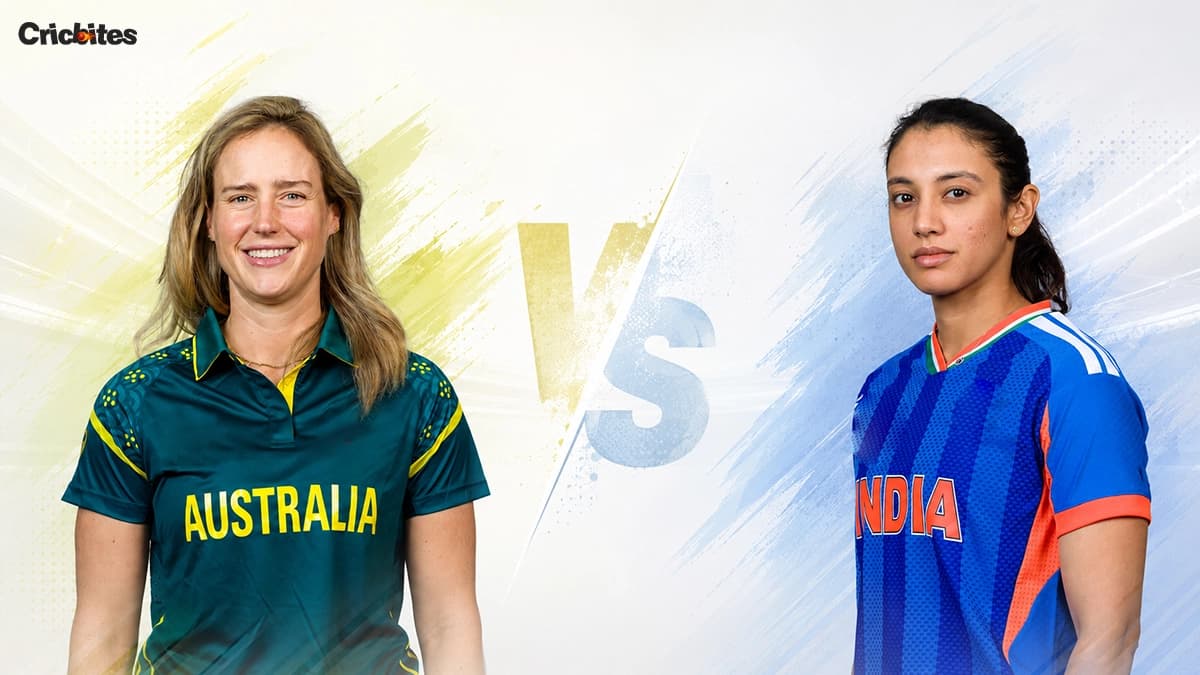
Ellyse Perry is the most complete women’s cricketer of her generation. Smriti Mandhana is the most exciting women’s batter in the game right now. Mandhana is currently the number one batter in the Women’s ODI batting rankings while Perry sits in fifth place. Let’s find out who is better between the two based on their stats.
Test Cricket
Perry has played 15 Tests scoring 1006 runs at an average of 59.2 with two centuries and five fifties. Her highest score is an unbeaten 213. Mandhana has played eight Tests scoring 635 runs at an average of 48.9 with two centuries and three fifties.
Both players have the same number of Test centuries but Perry’s average is over ten points higher. Women’s Test cricket is played rarely and both players have limited appearances but Perry’s numbers across a larger sample size give her the edge here. An average of 59.2 in any format of Test cricket is exceptional. Perry wins this format clearly.
| Player | Years | Mat | Inn | NO | Runs | HS | Avg | BF | SR | 100s | 50s | 4s | 6s |
|---|---|---|---|---|---|---|---|---|---|---|---|---|---|
| Ellyse Perry | 2008–2026 | 142 | 137 | 9 | 3021 | 113* | 58.12 | 2040 | 145.58 | 2 | 24 | 119 | 91 |
| Smriti Mandhana | 2014–2024 | 71 | 62 | 9 | 1495 | 70* | 57.18 | 987 | 163.72 | 2 | 3 | 108 | 83 |
ODI Cricket
This is where the debate becomes genuinely competitive. Perry has played 168 ODIs scoring 4581 runs at an average of 48.2 and a strike rate of 78.6 with three centuries and 37 fifties. Mandhana has played 120 ODIs scoring 5411 runs at an average of 47.9 and a strike rate of 90.4 with 14 centuries and 35 fifties.
Mandhana has 11 more ODI centuries despite playing 48 fewer matches. That number is extraordinary. Mandhana scored 88 runs off 60 balls against England in the 2025 Women’s ODI World Cup marking her ninth fifty-plus score of the calendar year and equalling Perry’s record for the second most fifties in a single year in Women’s ODIs.
Mandhana’s strike rate of 90.4 against Perry’s 78.6 also shows she scores faster and puts bowling attacks under more pressure. Mandhana wins the ODI format and it is not a close call.
| Player | Years | Mat | Runs | HS | Avg | SR | 100s | 50s |
|---|---|---|---|---|---|---|---|---|
| Ellyse Perry | 2007–2025 | 153 | 4500+ | 112 | ~50.8 | ~78 | 3 | 34+ |
| Smriti Mandhana | 2013–2026 | 105+ | 5200+ | 135 | ~52 | ~92 | 14 | 31+ |
Read More: Virat Kohli vs Babar Azam: Who Is Better? Average, Statistics and Batting Comparison
T20 International Cricket
Perry has played 174 T20Is scoring 2297 runs at an average of 30.2 and a strike rate of 117.2 with no centuries and nine fifties. Mandhana has played 166 T20Is scoring 4333 runs at an average of 29.9 and a strike rate of 124.5 with one century and 33 fifties.
The difference in total runs is nearly 2000. Mandhana has 24 more fifties and a higher strike rate. Both averages are almost identical but the volume and impact separate them clearly. Mandhana is the far better T20I batter. Her overall T20 record across all competitions strengthens that case further.
Across 326 T20 matches she has scored 8819 runs at a strike rate of 126.6 with four centuries and 60 fifties. Those are numbers that belong in conversations about the best T20 batter in women’s cricket right now.
Read Next: Deepti Sharma vs Amelia Kerr: Comparing Their Batting Stats And Records
| Player | Years | Mat | Runs | HS | Avg | SR | 100s | 50s |
|---|---|---|---|---|---|---|---|---|
| Ellyse Perry | 2008–2026 | 162+ | 2088+ | 75 | ~31 | ~115–120 | 0 | 9+ |
| Smriti Mandhana | 2013–2026 | 166 | 4331 | 105 | ~30.2 | 124.54 | 1 | 33 |
WPL and Franchise Cricket
Both players have shared the same franchise and their WPL records put their form in sharp focus. Perry was the leading run-scorer for RCB in the 2024 WPL season with 347 runs in nine matches at an average of 69.4 as the team won their first title. In WPL 2025 Perry scored 372 runs in eight games finishing second in the batting charts as MI won the title.
Perry is RCB’s all-time leading run scorer in the WPL with 972 runs while Mandhana had 936 runs entering the 2026 final and needed just 37 more to overtake her. Inside the same team, across the same seasons, they have pushed each other to the top of the batting charts every single year.
| Player | Mat | Runs | Avg | SR | 50s |
|---|---|---|---|---|---|
| Ellyse Perry | 25 | 972 | 64.80 | 132.96 | 8 |
| Smriti Mandhana | 35 | 1023+ | – | 136.76 | 7 |
Who Is Better Overall?
Perry is the better Test batter. Her average of 59.2 across 15 matches with a double century on her record is hard to argue against. In ODIs and T20Is, Mandhana is ahead on volume, strike rate, and century count. Perry is the more accomplished bowler, a genuine match-winning all-rounder whose contribution goes well beyond batting alone.
That dimension separates them at the team level. As a pure batter in the white-ball formats, Mandhana is the better player right now. As a complete cricketer across all three formats and all disciplines combined, Perry’s body of work across nearly two decades still sets the standard.
Follow Cricbites for the latest cricket updates, match schedules, player news, records, rankings and expert insights from around the world.
Related Post: Shreyas Iyer vs Rishabh Pant: Who Is Better? Batting and Stats Comparison