
Loading…

Prize Money And Full List of Awards In T20 World Cup 2026
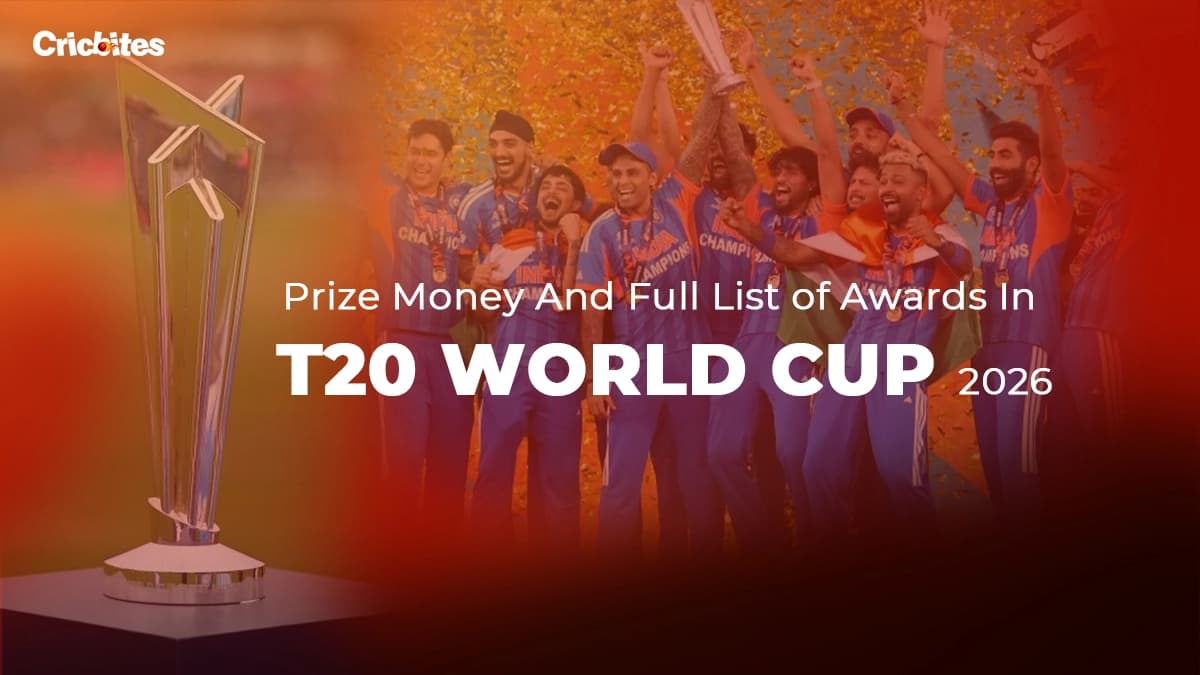
The 2026 ICC Men’s T20 World Cup was a tournament of great excitement, pomp and circumstance. It ran from February 7 to March 8. It was hosted by India and Sri Lanka. Twenty teams came to play. The prize pool was bigger than ever before. It was around thirteen and a half million dollars. That money was waiting on the table for the teams that could win it. The tournament had trophies and salaries and a few names that will be mentioned again.
Estimated Prize Money In T20 World Cup 2026
| Position | Prize Money (USD) | Approx. Value (INR) |
|---|---|---|
| Champions (India) | $3,000,000 | ₹25.1 crore |
| Runner-up (New Zealand) | $1,600,000 | ₹13.4 crore |
| Semi-finalists (each) | $790,000 | ₹6.6 crore |
| Super 8 Teams (each) | $380,000 | ₹3.2 crore |
| Group Stage Teams (each) | $250,000 | ₹2.1 crore |
Total Prize Pool
The total prize money was about $13.5 million. That was more than the previous edition. The money was divided by finish. The further the team advanced, the more prizes they won. The tournament had a group stage, knockouts, and a final. The money was simple and clear. They rewarded success and rewarded the hard work to get there.
Champions
India won the tournament. In the final, they defeated New Zealand. India scored 255 for 5 in twenty overs. New Zealand were all out for 159 in nineteen overs. India won by 96 runs. In return, they got 3 million dollars. That amount is about 17.5 crore rupees. This victory gave India their third ICC Men’s T20 World Cup title. The innings in the final were full of power and timing. Then the bowlers finished the job. The trophy went back to a country that knows how to value cricket.
Runners-up
New Zealand finished runners-up. After a tough struggle in the group stage and knockouts, they reached the final. They received $1.6 million for their run. They couldn’t win the last match. They fought till the end. The prize money was a clear reward for reaching the last day and surviving until the final over.
Next Read: List of Indian Cricketers Who Won Arjuna Award (From 1961 to 2023)
Losing Semi-finalists
Two teams, England and South Africa, lost in the semi-finals. Each team earned around seven hundred and seventy thousand five hundred dollars. Reaching the semi-finals meant a place in the top four and a significant financial reward. This amount was not as much as the winners. It was still significant. For many boards and players, this amount helps to fund the next season and the upcoming tour.
Teams Finishing 5th–8th
The fifth and eighth-placed teams received prize money for reaching the Super Eight stage. These teams included Pakistan, Sri Lanka, West Indies and Afghanistan. Each of those teams received around three hundred and eighty-two thousand five hundred dollars. They had progressed from the initial group stage but failed to reach the semi-finals. This money was a symbol of progress. It paid for travel and training and the work of building a team that could go further next time.
Teams Finishing 9th–12th
The teams ranked ninth to twelfth also received prize money. These teams were Australia, Bangladesh, USA and Ireland. Each of these teams received about two hundred and forty-seven thousand five hundred dollars. They were eliminated after the initial group stage. The amount was small but real. It was a recognition that playing in tournaments costs money and that participating at this level is valuable.
Teams Finishing 13th–20th
The thirteenth to twentieth ranked teams also received cash prizes. These teams included the Netherlands, Namibia, Zimbabwe, Nepal, Oman, UAE, Canada and Italy. Each of these teams earned around two hundred and fifty thousand dollars. They were eliminated in the initial group stage. This figure is similar to the money received by some of the higher ranked teams. The point was that many teams in the tournament were given money so that the game could develop and the smaller boards could remain operational.
Player of the Tournament
Sanju Samson was awarded the Player of the Tournament. He scored three hundred and twenty-one runs in the competition. He put in several important performances in the knockout stages. When his batting was important, it was consistent and decisive. He played innings that turned the tide of the match and he did it at crucial moments. This award was a measure of consistency and timing.
Player of the Match (Final)
In the final, Jasprit Bumrah was awarded the Player of the Match award. He took four wickets for fifteen runs. His bowling was the kind that ends contests. He struck early and he struck hard. The numbers tell the story. The final was a match that required a response from the bowlers and they succeeded. This award was a clear recognition of the performance that decided the title.
Most Runs (Highest Run Scorer)
Sahibzada Farhan became the highest run-scorer in the tournament. He scored three hundred and eighty-three runs. His runs were crucial for Pakistan. He often led the innings and got the required scores for his team. The top scorer is a name that will be remembered in the record books. Runs are the most obvious measure of a batsman’s performance.
Leading Wicket-Taker
Jasprit Bumrah and Varun Chakravarthy became the joint highest wicket-takers. Both took fourteen wickets in the tournament. Their bowling helped India’s campaign in different ways. One bowled with pace and control. The other turned the match around with spin and skill. Together they led the attack that took India to the title. The number of wickets is a simple number that reflects their work.
Read More: ICC Men’s T20 World Cup Winners List (From 2007-2026)
Conclusion
The 2026 T20 World Cup had clear sums and clear names. The prize pool was bigger than ever before and it gave money to teams at every level. India won the title and three million dollars. New Zealand took the pride of runners-up prize and long runs. Sanju Samson was the best player of the tournament in terms of runs and time. Jasprit Bumrah was the man of the final and one of the joint top wicket-takers. Sahibzada Farhan topped the run chart. Varun Chakravarthy matched the wickets. The tournament was played in heat and pressure. It gave money, medals and moments. The facts are simple. The game moved forward and records were written.
FAQs: Frequently Asked Questions
Q1. What was the total prize money for the 2026 ICC Men’s T20 World Cup?
The total prize money was around thirteen and a half million dollars. It was bigger than the previous edition. This amount was divided among the teams according to the finish. The advancing teams won more prize money.
Q2. How much prize money did the champions get?
India won the tournament and got three million dollars. This amount was the largest part of the prize money. It also came with a trophy and a record second title.
Q3. How much did the runners-up earn in the 2026 T20 World Cup?
New Zealand finished second and earned around 1.6 million dollars. They reached the final after a strong run during the tournament. This award reflects that effort.
Q4. Who won the Player of the Tournament award?
Sanju Samson won the award. He scored three hundred and twenty-one runs in the tournament. His batting helped decide important matches. This award was given to the player who made the most consistent impact.
Q5. Who took the most wickets in the 2026 T20 World Cup?
Jasprit Bumrah and Varun Chakravarthy were the joint top wicket-takers. They took fourteen wickets. Their bowling played a major role in India’s success during the tournament.



![Highest Individual Score in T20 World Cup History [2026 Updated List]](/_next/image/?url=https%3A%2F%2Fwww.cricbites.com%2Fwp%2Fwp-content%2Fuploads%2F2026%2F03%2Fhighest-individual-score-in-t20-world-cup-history.webp&w=256&q=75)

Hello Friends! My name is Harshil Raval. I work as an SEO Lead at Cricbites.com. I have over 4 years of experience. I am very passionate about writing about sports, especially cricket. I try to write in very simple and clear terms so that everyone can understand, even young readers. I enjoy sharing interesting match stories, player news, and helpful cricket information for fans. Writing about cricket makes me happy, and I always try to make my articles interesting and easy to read. I hope you enjoy reading my stories. Thank you very much for your support!