

Loading…

The Future of World Cricket
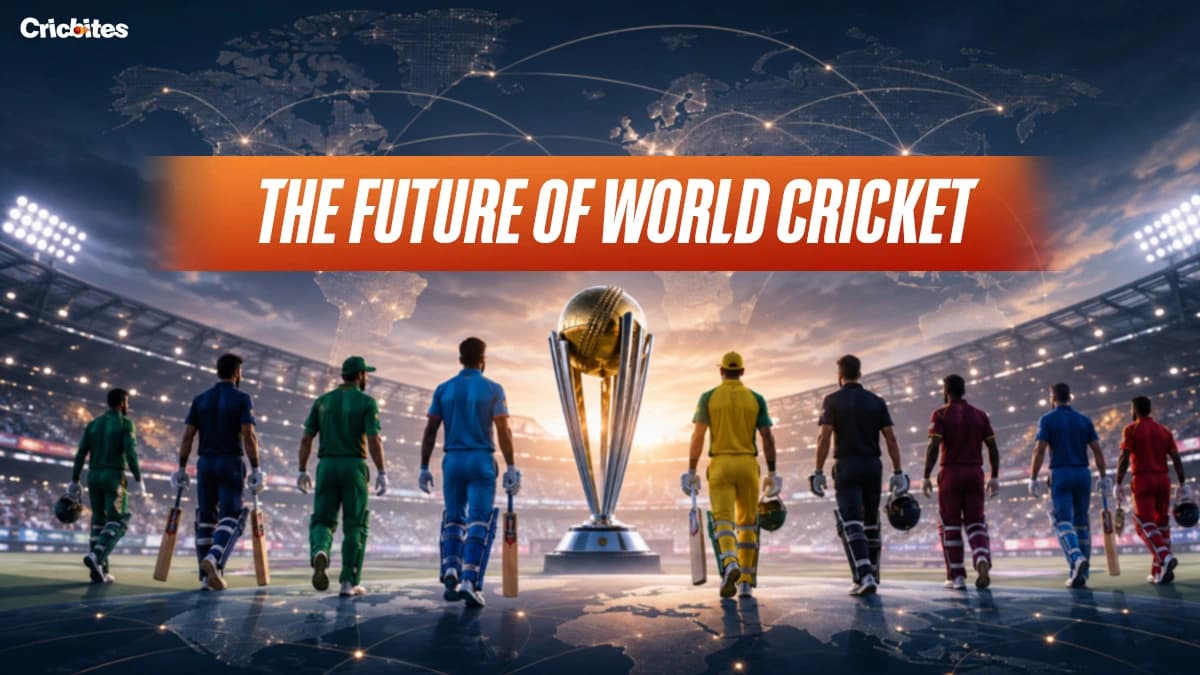
The Future of World Cricket: Bigger Tournaments, More Teams, Greater Competition
The Future of World Cricket: Bigger Tournaments, More Teams, Greater Competition
Cricket’s entering an exciting new age. The sport, hitherto the domain of a limited number of established countries, is gradually becoming more competitive and global and accessible. The future of international cricket will certainly include larger events, more teams, better chances for the newcomers and a structure that keeps the viewers hooked from the first game to the finale.
The recent modifications made by the International Cricket Council (ICC) already indicate this approach. The 2027 men’s Cricket World Cup will be 14 teams and the 2028 men’s T20 World Cup will stay at 20 teams but with a new format to boost competitiveness in the knockout round.
As cricket develops outside its traditional power centers, expect to see more surprising matches, new rivalries, new stars and tournaments that will cut across a larger spectrum of cricketing countries.
The Spread of Cricket Globally
Cricket’s influence has expanded significantly around the globe in the last decade. Away from the traditional cricketing powers, countries are spending more money on internal tournaments, player development, coaching, infrastructure and international exposure. This expansion is especially evident in T20 cricket as shorter matches make it simpler to promote the sport to new audiences.
The face of international cricket has also evolved with the introduction of new teams. Associate countries are becoming more capable of challenging established teams, causing memorable shocks and bringing players through who can compete at the top level.
This trend matters for the future since growing the sport is not only about adding more teams. “It’s about developing a wider pool of players to produce competitive cricket in different areas.
Larger World Cups Will Mean More Opportunities
One of the most visible trends in international cricket has been the growth of the big events. The 2027 ICC Men’s Cricket World Cup will include 14 teams, an increase from the 10-team tournaments in 2019 and 2023. The event will be jointly hosted by South Africa, Zimbabwe and Namibia.
“The expansion takes cricket’s biggest stage to more nations. For developing countries, the very fact of qualifying for a World Cup may provide important experience, financial rewards, worldwide exposure and motivation for the next generation.
The problem is the bigger the competition, the more one-sided match ups you could have. That is why the organization of tournaments will become more and more significant. The revamped 2027 World Cup will have a Super Series, group stage, Super 7 stage, semi-finals and final giving teams plenty of opportunity to battle it out for advancement.
More Teams Means More Competition
The more teams that play in international events, the less predictable cricket becomes. The traditional powerhouses may still be favorites but the gap between established and new countries might continue to close.
The recent results from the emerging sides have already shown the extent of upsets in world T20 cricket. Harder match ups allow players to get experience against top opponents and also force established teams to prepare more thoroughly for each opponent.
The future may potentially bring more matches where form is more important than ranking and reputation. That’s good for the fans, because uncertainty is one of the biggest ingredients of sporting excitement.
How the Expansion of Tournaments Could Change Cricket
| Area | Current Direction | Future Impact |
|---|---|---|
| World Cup teams | Expansion to 14 teams in 2027 | More nations get global exposure |
| T20 World Cup | 20 teams with revised format in 2028 | Greater opportunities for emerging teams |
| Associate nations | More pathways into major events | Stronger global cricket ecosystem |
| Tournament formats | Multi-stage competitions | More meaningful matches |
| Fan engagement | Digital and streaming growth | Wider international audiences |
| Player development | Greater international exposure | Deeper talent pools |
| Competition | More teams and stronger emerging nations | More unpredictable results |
T20 Cricket To Drive Expansion
The worldwide growth of the game is anticipated to continue to be driven mostly by T20 cricket. Traditional cricket fans and new viewers are attracted by its rapid pace, shorter length and entertainment value.
The 2028 men’s T20 World Cup would still include 20 teams but will have five groups of four teams in the first round. The new format will also provide more teams a chance to the second round and make games between developing countries more meaningful.
For nations still constructing their cricket systems, this might be a huge blow. A good T20 performance against a top country may draw spectators, sponsors, young players and investment. Such chances may aid in building sustainable cricketing ecosystems throughout time.
Developing Countries Might Become New Powerhouses
A new generation of international competitors might emerge in the next phase of cricket’s progression. Countries who are not traditionally part of the elite may become regulars in the World Cup and, in time, could challenge for the biggest prizes.
Cricket boards will have to concentrate on grassroots development, professional domestic tournaments, excellent coaching, sports science, women’s cricket and paths for young players to accomplish this.
The ICC’s planned 16-team global event, to be held as a forerunner to the T20 World Cup, also highlights how international cricket might generate more competitive possibilities for associate countries.
Fans Will Experience Change With Technology
The game’s future isn’t only about what occurs on the pitch. Technology will become more and more crucial in how people watch, understand, and participate in the game.
Advanced analytics, ball-tracking technology, artificial intelligence, augmented and virtual reality, interactive broadcasts and personalized digital material might make cricket more accessible than ever before.
Future tournaments may also provide spectators customized stats, tactical information in real time, player comparisons, interactive scorecards and immersive watching experiences across many platforms.
Women’s Cricket To Be a Key Part of Growth
A genuinely global future for cricket cannot be attained without the continuous growth of women’s cricket. “Women’s international cricket has already grown considerably with more teams and more players moving into professional systems.
The future has to be bigger tournaments for women, better domestic leagues, better facilities, greater broadcasting, more commercial prospects.
With more nations investing in women’s cricket, the game might uncover a whole new generation of players and fans. This kind of development may also serve to encourage young females throughout the globe to see cricket as a professional athletic career.
Test Cricket Has To Change
Test cricket is not dead – the rise of T20 cricket doesn’t imply it’s over. Or maybe the longest format has to be more strategically safeguarded and financially viable.
Test cricket remains the ultimate test of skill, patience, strategy and stamina. The difficulty is making sure that there are enough countries with the resources and level of competition to play it on a regular basis.
A healthier future for Test cricket might involve improved scheduling, competitive international leagues, more financial assistance for poorer countries and more marketing of blockbuster Test series.
Future World Cups Could Be More Unpredictable
Imagine a future with more countries having professional domestic leagues, better training facilities, experienced coaches and players routinely playing against the best competition. The outcome might be a cricketing environment where established sides can no longer assume qualifying or victory as certain.
More teams may also produce more memorable tales. A rookie player rising to fame overnight in the world, a developing country overcoming a past champion, an underdog reaching the semi-final – these may become iconic events in cricket history.
That is why global growth is so vital. And it is not just a matter of scheduling games. It’s about generating additional options.
Conclusion
The future of global cricket is likely to be larger, more varied and more competitive. Major events are expanding, developing countries are getting more chances, T20 cricket is growing, technology is advancing, and women’s cricket is continuing to climb – all contributing to a new international environment.
But growth has to be controlled carefully. More teams should equal more possibilities, not more meaningless matches. There ought to be more tournaments, better competitions and not overburden players. And commercial expansion should help the development of cricket in places where the sport is still finding its feet.
If these obstacles are met, cricket may be on its way to becoming a genuinely global sport. Larger tournaments will provide the chance, but it’s up to the better development systems and genuine competition to seize it.
Stay Updated with Cricbites
With the cricket calendar growing, it’s becoming more vital than ever to stay up to date with major ICC events, international series, rankings, records, schedules, player performances, and the latest cricket headlines.
For the latest cricket news, analysis and opinion, visit cricbits and keep following the game into a new thrilling age.