

Loading…

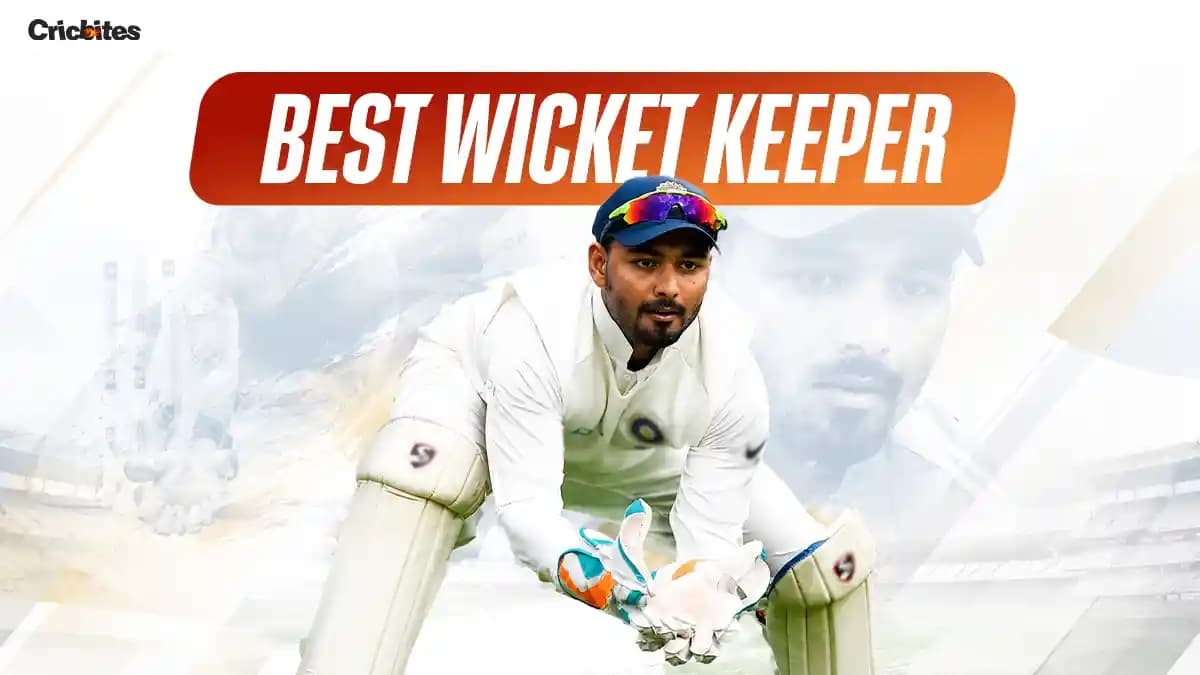
Best Wicket Keeper in the World :Top 15 Greatest Wicket Keepers of All Time
| No. | Table Of Content |
|---|---|
| 1 | Who is the Best Wicket Keeper in Cricket? |
| 2 | How We Ranked the Best Wicket Keepers |
| 3 | Top 15 Best Wicket Keepers in Cricket History (2026 Rankings) |
| 4 | Best Wicket Keepers Across Different Formats |
| 5 | Evolution of the Wicket Keeper’s Role |
| 6 | Frequently Asked Questions (FAQs) |
| 7 | Conclusion |
Wicket keeping is one of the toughest jobs in cricket. As a wicket-keeper, you need quick reflexes, safe hands, good anticipation and the ability to concentrate on every ball. In contemporary cricket, the job has developed even further with wicket keepers expected to score runs, lead the field and impact matches in all three forms.
As for the greatest wicket keeper in the world, the names that come to mind are always MS Dhoni, Adam Gilchrist and Mark Boucher. Dhoni is known for his finishing skills that are second to none, his calm leadership and his lightning-fast stumpings. Gilchrist redefined the wicketkeeper’s position as a dynamic match-winning batsman, while Boucher is one of the most successful glove men in cricket history with record-breaking dismissals.
Comparing wicket keepers throughout eras is never easy. This makes direct comparisons impossible. Conditions, formats, equipment and team strategy have changed drastically throughout time. Some were masters just behind the stumps, others revolutionized the position with their batting or leadership.
The ranking of the best wicket keepers of all time is done based on many aspects such as their wicket keeping ability, batting performances, leadership characteristics, career records, longevity, consistency across forms and their overall effect on the game.

Who is the Best Wicket Keeper in Cricket?
Cricket has produced a lot of renowned wicket keepers, all of them having their own talents to the game. Some were unplayable behind the stumps, others revolutionized the job and became world level hitters. This position requires excellent reflexes, decision making, consistency and mental fortitude. Thus, the question of who is the finest wicket keeper in cricket has long been a matter of dispute among fans and experts.
This article reveals the answer straight away but also explains why these three famous players are always considered among the best wicket keepers ever. We’ll also discuss the strategy utilized to compare wicket keepers equitably across generations.
Dhoni’s lightning quick stumping, cool decision making under trophy winning leadership have made him the gold standard for wicket keepers throughout the globe.
Top 3 Best Wicket Keepers in the History of Cricket
| Rank | Player | Country | Greatest Strength |
|---|---|---|---|
| 1 | MS Dhoni | India | Leadership, stumping, finishing |
| 2 | Adam Gilchrist | Australia | Aggressive batting revolution |
| 3 | Mark Boucher | South Africa | Record dismissals and consistency |
Talking about the top three finest wicket keepers in the history of cricket MS Dhoni, Adam Gilchrist and Mark Boucher always stand out for their amazing glove work, match-winning heroics and enduring influence on the game.
MS Dhoni is considered as one of the best wicket keepers of all time due to his record for the most stumpings in cricket history, outstanding awareness throughout the game and his coolness under pressure. One of his main skills was anticipation. Dhoni didn’t just react to the ball, he anticipated the batsman’s motion even before the ball came to him, which meant he could affect stumpings in fractions of a second.
His fast decision-making, right decisions for the DRS and great communication with the bowlers enabled India to generate wicket-taking chances frequently. But Dhoni’s history as a leader makes him more than just a wicket keeper. He is the only skipper to have won the ICC Champions Trophy, ICC T20 World Cup and ICC Cricket World Cup.
Adam Gilchrist re-defined the contemporary wicket keeper. He proved that a keeper could be one of the most devastating opening hitters in international cricket. His agility, safe hands behind the stumps and aggression with the bat were a big part of Australia’s domination in the late 1990s and 2000s. Gilchrist was an inevitable inclusion among the all-time greats because of his ability to influence the course of a match with both bat and gloves.
Mark Boucher is in the top three due of his consistent longevity and unequaled consistency. Boucher, who holds the record for most dismissals by a wicket-keeper in international cricket, was known for his dependability, keen reflexes and ability to perform across all forms. His reliable glove-work and useful lower-order batting made him one of South Africa’s most significant cricketers.
The rankings take into account a variety of elements including wicket keeping statistics, consistency across formats, batting contributions, longevity, leadership effect, match-winning performances and overall impact on the development of the wicket keeping job. The technique below shows how each of these factors was taken into account to get the final rankings.
How We Ranked The Best Wicket Keepers

Wicket keepers across generations can never be compared easily as the game has evolved a lot over the years. Equipment has improved, pitches have changed, fitness has improved and expectations of batting have dramatically increased.
Purpose
So we didn’t only use the stats, we rated each wicket keeper on the same criteria, to ensure the rankings were fair and believable. It allows us to believe that we are not just looking at the numbers but also the influence the player has on the pitch.
Skills
Great wicket keepers are built on ability behind the stumps. We measured overall technique, consistency, footwork, glove work, and dependability under varied match situations.
Reflexes
Having quick responses is important to be able to step up to the stumps and take tough catches. Players with fast reactions and rapid decision making got high scores.
Stumpings
We looked at their stumping ability, especially against spinners, where speed and anticipation are crucial. The fastest stumping in cricket history highlights the level of reflexes required from elite wicketkeepers.
Catches
The quantity and quality of receptions, tough opportunities, and consistency over a lengthy career were big considerations in the rankings.
Match Awareness
Great wicket keepers do more than take the ball. We considered game knowledge, field placement, communication with bowlers and the capacity to influence tactical choices.
Longevity
Players who have consistently played at a high level over many years and adapted to changing forms were given extra credit for their continued brilliance.
Batting
Modern-day wicket keepers are expected to chip in with the bat. We looked at hitting consistency, innings that won games, flexibility and overall worth to the club.
Leadership
The total impact of each player was judged on factors like leading a team, directing bowlers and making good judgements on the pitch.
Impact
Beyond the numbers, we looked at how each goalie affected games, motivated team-mates and shaped the growth of the job.
Records
The greats were divided by career milestones, dismissal records, superb performances in big tournaments and other important achievements.
Era Adjustment
Players played under varying rules, playing conditions, equipment requirements and levels of competitiveness. We compensated for these variations to allow for fair comparisons across generations.
Top 15 Best Wicket Keepers in Cricket History (2026 Rankings)
Selecting the greatest wicket keepers of all time requires balancing glove work, batting ability, leadership, longevity, and overall impact on the game. While statistics are important, they do not tell the complete story. These rankings consider performances across all formats, influence on cricket, consistency under pressure, and achievements throughout each player’s career.
Top 15 Wicket Keeper Rankings
| Rank | Player | Country | International Career | Major Strength | Best Known For |
|---|---|---|---|---|---|
| 1 | MS Dhoni | India | 2004–2019 | Leadership & Stumping | Greatest all-round wicket keeper |
| 2 | Adam Gilchrist | Australia | 1996–2008 | Explosive Batting | Revolutionized wicket keeper-batters |
| 3 | Mark Boucher | South Africa | 1997–2012 | Keeping Consistency | Most international dismissals |
| 4 | Kumar Sangakkara | Sri Lanka | 2000–2015 | Batting Excellence | Elegant keeper-batter |
| 5 | Ian Healy | Australia | 1988–1999 | Glove Work | Australia’s legendary keeper |
| 6 | Quinton de Kock | South Africa | 2012–Present | White-ball Batting | Modern attacking wicket keeper |
| 7 | Rodney Marsh | Australia | 1970–1984 | Technical Keeping | Icon of Australian cricket |
| 8 | Brad Haddin | Australia | 2001–2015 | Fighting Spirit | Reliable match winner |
| 9 | Jeff Dujon | West Indies | 1981–1991 | Safe Hands | Backbone of WI dominance |
| 10 | Jos Buttler | England | 2011–Present | Finishing Ability | White-ball superstar |
| 11 | Mushfiqur Rahim | Bangladesh | 2005–Present | Consistency | Bangladesh legend |
| 12 | Denesh Ramdin | West Indies | 2005–2019 | Reliable Keeping | Consistent performer |
| 13 | Rishabh Pant | India | 2017–Present | Match-winning Batting | Fearless Test batter |
| 14 | BJ Watling | New Zealand | 2009–2021 | Dependability | New Zealand’s finest keeper |
| 15 | Wriddhiman Saha | India | 2010–2021 | Pure Glove Work | Modern keeping specialist |
MS Dhoni (India)

There is no conversation about the finest wicket keeper in cricket without MS Dhoni. His unprecedented stumping speed, great leadership and ability to finish games. Dhoni was one of the fastest wicket keepers the sport has ever seen due to his exceptional anticipation and inventive skills. Besides his talents behind the wickets and often producing match-winning performances with the bat, he led India to many ICC titles as captain. His impact on the current game of cricket goes much beyond statistics, he is the baseline for all wicket keepers.
Mini Stats Box
- Country: India
- Career 2004–2019
- Position: Wicket keeper/batsman International Dismissals: 800+ ICC Titles as Captain: T20 World Cup, ODI World Cup, Champions Trophy
Why Ranked Here
Dhoni, with his superb wicket-keeping, tactical nous, leadership, consistency and knack of winning big matches in all forms, is at the top of the list.
Key Achievements
- Fastest stumping tactics in the history of cricket.
- First skipper to win all three ICC white-ball awards
- Over 800 foreign layoffs.
- One of the all-time great ODI finishes.
Adam Gilchrist (AUS)

Adam Gilchrist revolutionized the position of a wicket keeper by demonstrating that you could be an outstanding glove man and one of the most destructive batsmen in international cricket. His audacious stroke play in the top and middle order transformed the role of the wicketkeeper-batsman in teams. Gilchrist was outstandingly quick behind the stumps, especially against Australia’s world-class spin attack, and his acrobatic catches and lightning-fast stumpings made him a complete package. A three-time World Cup champion, he remains one of cricket’s greatest match-winners and revolutionized the job of the contemporary wicket keeper.
Mini Stats Box
- Country – Australia
- Career – 1996–2008
- Position – Wicket keeper/Batsman
- International Dismissals – 900+
- Major ICC Titles – ODI World Cup (1999, 2003, 2007), Champions Trophy (2006)
Why Ranked Here
Adam Gilchrist revolutionized the job of a wicket keeper, combining world-class glove work with explosive hitting at the top of the order. He was a daring contemporary wicketkeeper-batter who was a huge part of Australia’s domination in the late 90s and 2000s.
Key Achievements
- It has been a game-changer for the international wicket keeper batsman.
- Three-time champion of the ICC Cricket World Cup (1999, 2003, 2007).
- 149 (104 balls, 2007) – One of the best centuries in World Cup finals.
- 900+ international dismissals as a wicket-keeper
- 15,000+ international runs with a blistering strike rate.
Mark Boucher (RSA)

Mark Boucher is still the gold standard for conventional wicket keeping. His amazing consistency behind the wickets, notably standing behind South Africa’s world-class pace attack, won him the record for most dismissals in international cricket. Rarely did Boucher put a foot wrong and he maintained his top status across all forms for much over a decade. His knack for generating big runs in high-stakes scenarios further solidified his status as one of the most reliable players in the game.
Mini Stats Box
- Country – South Africa
- Career – 1997–2012
- Position – Wicket keeper/Batsman
- International Dismissals- 990+
- Notable Achievement- Record holder for the most dismissals in international cricket at the time of his retirement
Why Ranked Here
Boucher set the benchmark for consistency in wicketkeeping, combining exceptional glovework with valuable lower-order batting to become one of the greatest wicketkeepers in cricket history.
Key Achievements
- Winner of three ICC Cricket World Cups.
- More than 900 worldwide layoffs
- One of the best aggressive openers in the world ever.
- Changing demands of the contemporary wicket-keeper batsman
Kumar Sangakkara (SL)
Kumar Sangakkara had the perfect blend of grace and incredible consistency. He was Sri Lanka’s wicket keeper and he was an excellent wicket keeper. He could score match-winning tons as well as perform challenging dismissals behind the wickets. Few players have succeeded as well in combining batting brilliance with superb wicket keeping as Sangakkara.
Mini Stats Box
- Country: Sri Lanka
- Career: 2000- 2015
- Position: Wicket Keeper Batsman International Dismissals: Over 600 International Runs: Over 28,000
Why Ranked Here
Sangakkara was a top batter and a fine wicket keeper and world class in all departments.
Key Achievements
- 28,000 international runs.
- More than 600 dismissals as a wicket keeper.
- ICC Cricketer of the Year Winner
- One of the best players to come out of Sri Lanka.
Ian Healy (ENG)
Ian Healy set the stage for Australia’s wicket keeping brilliance before Adam Gilchrist. Healy was noted for his impeccable technique and focus and was equally adept against both speed and spin.
Mini Stats Box
- Country: Australia
- Career: 1988-1999
- Role: Wicketkeeper-batsman International Dismissals: 600+ Test Matches: 100+
Why Ranked Here
Healy’s glove work was of the highest order and his consistency and durability made him one of cricket’s excellent specialist wicket-keepers.
Key Achievements
- Over 600 overseas dismissals.
- He has played in almost 100 Test matches.
- Set benchmarks for Australian wicket keeping.
- Known for great technique and consistency.
Quinton de Kock (SA)
Quinton de Kock is a superb example of the contemporary day wicket-keeper. Aggressive batting at the top of the order and athletic keeping has made him one of South Africa’s best match winners. He has achieved international renown for his ability to dominate the bowlers and maintain good standards behind the wickets.
Mini Stats Box
- Country South Africa
- Career: 2012 until date
- Role: Wicket Keeper-Opener International Dismissals: 500+ International Runs: 11,000+
Why Ranked Here
Add in aggressive batting, dependable wicket keeping and regular performances and you have one of South Africa’s best wicket keeper-batters in De Kock.
Key Achievements
- Over 11,000 international runs.
- 500+ international dismissals.
- Multiple appearances in ICC tournaments.
- One of the most successful openers from South Africa
Rodney Marsh (AUS)
Rodney Marsh was an early Australian legend of wicket-keeping. His cooperation with Dennis Lillee was responsible for numerous notable dismissals. Marsh’s safe hands, anticipation and exceptional consistency made him a role model for future generations.
Mini Stats Box
- Country:Australia
- Career 1970-1984
- Role: Wicket Keeper-Batter International dismissals: 450+ Test Matches: 90+
Why Ranked Here
Marsh’s technical skill, consistency and effect on future generations make him one of the all-time greats of wicket keeping in cricket.
Key Achievements
- Legendary relationship with Dennis Lillie.
- Over 450 international dismissals.
- One of the best specialty keepers in Australia.
- ICC Hall of Fame Inductees.
Brad Haddin (AUS)
One of cricket’s most demanding jobs, Adam Gilchrist, was successfully replaced by Brad Haddin. He contributed fight, steady keeping and aggressive batting to the Australian line-up. His services in vital Ashes series and ICC competitions were significant.
Mini Stats Box
- Country : Australia
- Career: 2001-15
- Role: Wicket Keeper Batter International Dismissals: 450+ Test Hundreds: 4
Why Ranked Here
Haddin was following one of the finest wicket-keepers in the game and maintained consistently high standards with gloves and bat.
Key Achievements
- Major player in Australia’s Ashes wins.
- 450+ dismissals in International cricket.
- A host of match-winning Test matches.
- Dependable player in all forms.
Jeff Dujon (WI)
Jeff Dujon was part of one of the best pace assaults ever to hit the pitch in cricket and he seldom made errors. His cool style, tidy collecting and useful batting made him one of the most significant players in the West Indies’ successful period.
Mini Stats Box
- Country: West Indies (West Indies)
- Career: 1981-1991
- Role: Wicket Keeper-Batter International Dismissals: 475+ Tests: 80+
Why Ranked Here
His metronome regularity with the gloves and his ability to perform with one of the finest bowling assaults of the game puts him in the pantheon of all-time greats.
Key Achievements
- Over 475 international dismissals.
- A dependable lower-order batsman.
- Dominant age of the West Indies essential portion.
- Great performances in the test arena.
Jos Buttler (ENG)
Jos Buttler is one of the best white-ball wicket-keepers of the present age. Explosive batting, creative stroke play and dependable keeping have turned England into one of cricket’s greatest limited-overs sides.
Mini Stats Box
- Country England
- Years Active: 2011 – present
- Role: Wicket Keeper-Batter International Dismissals: 450+ ICC World Cup Titles: ODI World Cup, T20 World Cup
Why Ranked Here
Buttler is an outstanding white-ball batsman, a solid glove man and has a proven track record in high-pressure international competitions.
Key Achievements
- ICC Cricket World Cup champion.
- ICC T20 World Cup Champion.
- More than 450 foreign terminations.
- One of England’s best white ball cricketers.
Mushfiqur Rahim (BAN)
Mushfiqur Rahim has been one of the finest Bangladeshi cricketers. His consistency, tenacity and versatility have helped him raise Bangladesh’s profile on the international level and he has contributed considerably with both bat and gloves.
Mini Stats Box
- Country Bangladesh
- Professional Career: 2005–Present
- Position: Wicket keeper Batsman International Wickets: 500+
Why Ranked Here
Rahim’s lengthy career, his steady performances and his contributions with both bat and gloves have made him one of Bangladesh’s most significant cricketers.
Key Achievements
- 15,000 international runs and more.
- 500+ international dismissals.
- One of the most capped players in Bangladesh.
- Multiple match-winning performances in all forms.
Denesh Ramdin (WI)
Denesh Ramdin gave the West Indies solidity across all forms. His solid wicket keeping and useful lower-order runs made him one of the Caribbean’s most reliable players during a transitional period.
Mini Stats Box
- Country: West Indies
- Years: 2005–2019
- Role: Wicket Keeper-Batter International Dismissals: 450+ Test Hundreds: 2
Why Ranked Here
Ramdin won his spot on the strength of solid wicket keeping, strong bottom order batting and years of loyal service to the West Indies.
Key Achievements
- Over 450 international dismissals.
- Two Test hundreds.
- Long-standing West Indies wicket-keeper.
- Reliable performance across mediums.
Rishabh Pant (IND)
Rishabh Pant is one of the most intriguing wicket keeper-batters of the current age. His daring batting has made possible several great triumphs, notably in Test cricket. Pant’s keep continues to get better and he is fast moving up the all-time lists.
Mini Stats Box
- Country : India
- Years active: 2017–present
- Role: Wicket Keeper-Batter International Dismissals: 300+ Test Hundreds: 8+
Why Ranked Here
Pant’s powerful batting & progressively improving wicket keeping make him one of the most effective all-format performers in current cricket.
Key Achievements
- Test hundreds in away circumstances that won games.
- Over 300 international dismissals.
- Star of India’s great abroad conquests.
- One of the quickest wicket-keeper batsmen to score.
BJ Watling (NZ)
BJ Watling gained a lot of respect with his steadiness and perseverance. He paired steady wicket-keeping with key partnerships at the bottom of the order, often saving New Zealand from tough circumstances.
Mini Stats Box
- Country of origin: New Zealand
- Career 2009–2021
- Wicket Keeper-Batsman International Dismissals: 300+ Test Matches: 75+
Why Ranked Here
He’s good with the glove, he’s consistent and he can handle the job when the pressure’s on. All of which make him one of New Zealand’s finest specialized wicket keepers.
Key Achievements
- A key part of New Zealand’s World Test Championship winning side.
- Test partnerships have saved many a match.
- Wicket keeping has talents that are highly valued.
Wriddhiman Saha (IND)
Wriddhiman Saha is considered by many as one of the best pure wicket keepers of the current age. His offensive stats may not compare to some of his peers but his glove is rated among of the finest against both spin and speed.
Mini Stats Box
- Country of origin: India
- 2010–2021 years active
- Role: Wicket keeper Batsman International Dismissals: 150+ Test Matches: 40+
Why Ranked Here
Saha’s wicket keeping, particularly against spin, is at an elite level and he is among the finest specialized wicket keepers of his time.
Key Achievements
- Known across the land for superior glove craftsmanship.
- Has a good record against spin spinners.
- Reliable in the Test arena.
- One of India’s best specialized wicket-keepers.
Best Wicket Keepers Across Different Formats
Wicket keeping in cricket’s three international forms and franchise leagues has different responsibilities. Test cricket is a game of patience, immaculate technique and consistency over extended periods, whereas One Day Internationals demand a combination of solid glove work and explosive batting. The T20 Internationals and the Indian Premier League put even more premium on lightning-fast reactions, swift stumpings, explosive batting and decisive moments. Therefore, a player who is good in one format will not necessarily be the best in another. Here are the wicket keepers who have set the standard in each format.
Best Test Wicket Keepers

Test cricket isthe ultimate examination for a wicket keeper. Players spend long hours behind the stumps, often keeping to both fast bowlers and spinners on challenging surfaces. Every catch, stumping, and decision can influence the outcome of a five-day match.
| Rank | Player | Country | Strength |
|---|---|---|---|
| 1 | Mark Boucher | South Africa | Most Test dismissals among elite keepers |
| 2 | MS Dhoni | India | Outstanding against spin |
| 3 | Ian Healy | Australia | Exceptional technique |
| 4 | BJ Watling | New Zealand | Reliability and resilience |
| 5 | Rodney Marsh | Australia | Legendary glove work |
Best ODI Wicket Keepers

One Day Internationals need adaptability. Wicket keepers need to be a contributor with both bat and gloves and have to respond fast to changing match scenarios. Quick stumpings, precise catches and good finishing skills become equally crucial.
| Rank | Player | Country | Strength |
|---|---|---|---|
| 1 | MS Dhoni | India | Finishing and leadership |
| 2 | Adam Gilchrist | Australia | Explosive opening batter |
| 3 | Kumar Sangakkara | Sri Lanka | Elite batting consistency |
| 4 | Quinton de Kock | South Africa | Aggressive modern batting |
| 5 | Jos Buttler | England | Match-winning white-ball performances |
most dismissals in ODI history / ODI wicketkeeping records
Best T20I Wicket Keepers
In T20 Internationals, you need rapid responses and courageous batting. Every ball is a possible wicket therefore reactions and anticipation are more important than ever. T20 wicket keepers of today are also expected to score quickly and end innings under enormous strain.
| Rank | Player | Country | Strength |
|---|---|---|---|
| 1 | Jos Buttler | England | Explosive batting |
| 2 | MS Dhoni | India | Quick stumpings and finishing |
| 3 | Quinton de Kock | South Africa | Aggressive opening batter |
| 4 | Rishabh Pant | India | Fearless stroke play |
| 5 | Mushfiqur Rahim | Bangladesh | Consistency |
Best IPL Wicket Keepers

The Indian Premier League has produced some of the best wicket keeper-batsmen in franchise cricket. To be successful in the IPL, you need great all-round talent, with possibilities to finish under pressure, smash big and claim wickets quickly.
| Rank | Player | Team(s) | Strength |
|---|---|---|---|
| 1 | MS Dhoni | Chennai Super Kings | Leadership and finishing |
| 2 | Jos Buttler | Rajasthan Royals / Gujarat Titans | Explosive batting |
| 3 | Rishabh Pant | Delhi Capitals / Lucknow Super Giants | Aggressive batting |
| 4 | Dinesh Karthik | Multiple IPL Teams | Finishing ability |
| 5 | Wriddhiman Saha | Multiple IPL Teams | Elite wicket keeping |
The Indian Premier League (IPL) has produced some of the best wicket-keeper-batters in franchise cricket. IPL needs players who can make an impact in a few overs, not like international cricket. Wicket keepers are supposed to make quick stumpings, accurate catches, have tactical awareness and explosive batting, frequently under extreme pressure. With gloves and bat, the top IPL wicket keepers impact matches with their agility, finishing skill and consistency.
Expert Insight
Good wicket keeper depends on the format. Test cricket demands patience, attention and faultless technique over extended innings. In ODI cricket, the focus is on consistency, smart game management and the ability to adjust during the course of 50 overs. In T20I and IPL cricket, faster reflexes, quick stumpings, athletic fielding and the ability to score at a high strike rate are more common. That is why you see certain players being good across all formats and others being experts in franchise or international white-ball cricket.
Read More
Evolution of the Wicket Keeper’s Role

The job of the wicket keeper has experienced more change than any other function in the history of cricket. Once a specialist fielding position, it has become one of the sport’s most demanding all-round jobs. In the past generations wicket keepers were rated almost entirely on their catching but today’s keepers are expected to score runs, lead teams, analyze opposition and affect matches in a variety of ways.
The Traditional Wicket Keeper Era
For most of cricket’s history, a wicket keeper’s main role was simple: to execute perfectly behind the stumps. Having the ability to bat was an added plus, not a must. The selectors liked players with safe hands, good footwork, fast reactions and the capacity to stand for a long time without losing focus.
Wicket keepers were required to gather every ball cleanly, to take tough catches, to execute quick stumpings and to help bowlers with frequent communication. Wicket keeping was of an extraordinarily high caliber where a missed stumping or a lost catch could make or break a career.
Rise of the Wicketkeeper-Batsman
The advent of Adam Gilchrist transformed the function of the wicketkeeper radically. Wicket keepers before his time were selected largely for their glove skills, hitting was an added benefit and not a requirement. Gilchrist overturned that notion, becoming one of the most destructive batsmen in international cricket while still maintaining great standards behind the posts.
His aggressive style at the crease proved that a wicket keeper could dominate bowling assaults, score match winning century and still be amongst the safest hands in the game. Consequently, clubs throughout the globe started to seek out players who could contribute with both the bat and the gloves, changing the position and what it was expected to do.
The progression continued with the likes of Kumar Sangakkara, MS Dhoni, Brendon McCullum, Quinton de Kock, Jos Buttler and Rishabh Pant. Each had a different flavor but all supported the concept that great wicket keepers might also be crucial batsmen who can influence matches throughout Test cricket, One-Day Internationals and T20s.
Today, the wicket keeper-batsman has become a must for any successful side. At the top level, proficiency behind the stumps is a given, but the ability to contribute substantial runs has become as crucial and the job is one ofthe most demanding and prominent roles in contemporary cricket.
Modern Wicket Keepers

The duty of the current wicket keeper has changed drastically and is far more demanding than it has ever been throughout the history of cricket. Modern wicket-keepers are expected to provide a lot more than catches and stumpings. They are vital with the bat, direct bowlers, set field placements, convey tactical changes, and affect match outcomes with their leadership and game sense. since explained in our ranking approach, period adjustment was one of the primary assessment factors since the roles of wicket keepers have changed greatly throughout time.
Fitness has been another distinguishing feature of great wicket keepers also. They do hundreds of squats in an innings, react to balls coming at them at fast speeds and keep their attention for lengthy times.
Batting projections have also altered a lot. Today, wicket keepers are not seen as only specialized fielders who provide the odd run. Players such as Jos Buttler, Quinton de Kock and Rishabh Pant have shown how explosive batting can be coupled with great wicket keeping to make them important all-round assets to their sides.
Technology has also increased the power the wicket keeper has over the game. Decision review is handled by modern-day keepers using the Decision Review System (DRS) in addition to reading pitch conditions, advising captains on field placements and employing match analysis to detect batting tendencies and scoring zones.
Stats like catches and stumpings and dismissals still matter but they don’t convey the entire picture. Comparing wicket keepers from various periods needs taking into account the changing environment, the developing role, the technological developments and the overall influence on the game.
Frequently Asked Questions (FAQs)
1. Who is the best wicket keeper in the world?
MS Dhoni is widely regarded as the best wicket keeper in the world due to his exceptional glove work, lightning-fast stumpings, leadership, and finishing ability. His consistent performances across formats make him the benchmark for modern wicketkeepers.
2. Who is the greatest wicket keeper of all time?
MS Dhoni is often regarded as the finest wicket keeper of all time. Legends like Adam Gilchrist and Mark Boucher are close candidates.
3. Who has the most stumpings in international cricket?
He also holds the record for the most stumpings in international cricket with 195 (Tests, One Day Internationals and T20 Internationals).
4. Who has the most dismissals in cricket history?
Mark Boucher has the most dismissals as a wicket keeper in international cricket. He ended his career with 998 dismissals (catches and stumpings) across forms. His amazing durability, excellent technique and consistency behind the stumps kept him at best level during his 15-year international career.
5. Who is the best wicketkeeper-batsman?
Adam Gilchrist is perhaps the best wicketkeeper-batsman the game has ever seen. He changed the role by becoming an explosive opening hitter with the gloves on at world class levels.
6. Who is India’s best wicket keeper?
India has produced some of the best wicket keepers including Syed Kirmani, Kiran More, Nayan Mongia, Dinesh Karthik, Wriddhiman Saha and Rishabh Pant. But there is no debate that the best wicket keeper in India is MS Dhoni.7. Who is the
7. best wicket keeper in IPL history?
MS Dhoni is considered as best wicket keeper in IPL history. In his IPL career he has been consistently superb behind the wickets, guiding his side to several championship wins.
8. What qualities make a great wicket keeper?
A superb wicket keeper is a technically sound and a terrific athlete with outstanding cricket intelligence. Good reflexes, safe hands, great footwork, anticipation, focus and good communication with bowlers are important behind the wickets.
9. Who has the fastest stumping in cricket history?
MS Dhoni is known as the man who has effected the quickest stumpings in the history of the game. There is no official record for the single quickest stumping by any governing body but video analysis has showed that Dhoni frequently took about 0.08 to 0.10 seconds to take the bails off after catching the ball.
Conclusion
Picking the finest wicket keeper in the world is never an easy job. Greatness is characterized by much more than catches and stumpings. These positions have been thoroughly researched, taking into account criteria such as wicket keeping talents, batting skills, captaincy, career records, consistency, longevity, accomplishments and overall effect on the game. Every player on this list has left a huge impact, whether in terms of amazing glove work, match-winning batting feats or inspiring leadership.
MS Dhoni leads the list, grabbing the No. 1 slot for reinventing the job of the wicket keeper with his unparalleled stumping abilities, calm leadership and incredible finishing skills. Adam Gilchrist comes a close second for revolutionizing wicket keeping, his powerful batting at the top of the order while maintaining world-class standards behind the wickets. Mark Boucher rounds out the top three with his sheer consistency, technical brilliance and record-breaking international dismissals, making him one of the best pure wicket-keepers the game has seen.
Cricket will keep evolving and new stars will emerge but these heroes’ deeds have set the norm for generations to come. Their effect is not just to numbers, it has defined the contemporary day wicketkeeper’s attitude towards batting and glove work.
Keep Up To Date With The Latest Cricket News
Check these related guides on CricBites for more information on player records, player rankings, match analysis and cricket history. These articles provide you with some extra insights and help you find out more about the game’s best players and memorable situations.
Coming soon…
- Greatest Test Wicket Keepers of All Time
- Greatest ODI Wicket Keepers of All Time
- Best T20I Wicket Keepers in the World
- Best IPL Wicket Keepers of All Time
Keep following CricBites for expert rankings, player records, match analysis, and in-depth cricket insights.