

Loading…

PCB Investigates Mohammad Nawaz After Positive Drug Test Sparks Major Controversy
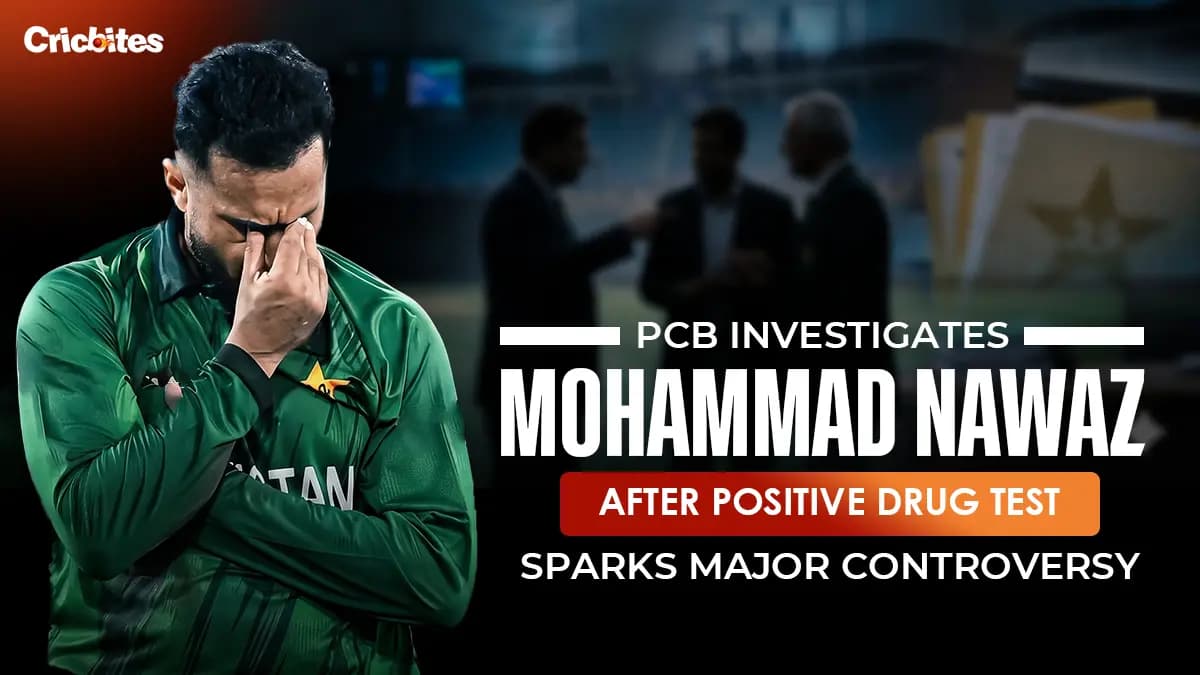
Cricket in Pakistan has always been about emotions. One day you’re the hero, the next you’re the headlines. And right now, Mohammad Nawaz is living another version of that reality. The Pakistan Cricket Board has launched an official investigation after he tested positive for a banned recreational substance during the ICC Men’s T20 World Cup 2026.
This is not a confirmed ban yet. This is not a closed case. But in modern cricket, even the word “investigation” moves faster than facts, and reputations start changing before decisions are made. Nawaz is currently exploring that very space. A PCB spokesperson confirmed that the board has formally initiated “due process” after being informed of the matter by the ICC.
The Moment Everything Started
The issue came to light during a routine anti-doping test conducted during the T20 World Cup 2026. Nawaz’s sample was flagged and later reported as positive for a banned recreational substance.
Once the International Cricket Council reviewed the results, it informed the Pakistan Cricket Board. From there, the PCB began its formal process. Officials have confirmed that the due process has begun and the matter will be resolved under anti-doping rules. What is important here is simple. There is no final decision yet. Just a process that has begun. After a positive result after a routine in-competition test during the ICC Men’s T20 World Cup 2026, the ICC formally notified the PCB as part of its anti-doping protocol, which turns the standard process into a serious disciplinary case.
PCB Response: Careful Steps, Not Quick Decisions
The PCB has not rushed into punishment. Instead, it has chosen the standard path. Verify, investigate, respond.
According to news reports, Nawaz is under review and has not been suspended at this stage. The board is collecting details, reviewing reports and waiting for the full process to be completed before taking any decision. This is how international cricket systems are designed to work. But outside the system, perception moves much faster than paperwork. The PCB has sent Nawaz’s medical and related background records to the ICC as part of an ongoing investigation.
Who Mohammad Nawaz Is in This Story?
This is not a case of a young debutant. Mohammad Nawaz is an experienced Pakistani all-rounder who has been part of the national setup in various formats for many years. He is known for his left-arm spin and lower-order batting contributions, often used as a balancing option in white-ball cricket.
In the ICC Men’s T20 World Cup 2026, he played all seven matches for Pakistan. However, the team failed to progress beyond the Super 8 stage. His individual impact was modest, and Pakistan’s campaign ended without a deep run in the tournament. That context is important because this case involves a senior, established player, not someone on the verge of selection. During the tournament, he took 15 runs and 7 wickets in all matches, showing a quiet but consistent role.
Further Reading: Abhishek Sharma Rewrites History & Breaks Gayle & Finch Record in IPL 2026 Thriller
First Major Impact: Lost Overseas Opportunity
Even before any final decision was made, the consequences are starting to show. Nawaz had signed a contract to play for Surrey in the T20 Blast in England in 2026.
After the positive test report was released and reached the administrative channels, that contract was cancelled. No suspension was officially required for that decision. The uncertainty itself was enough. This shows a simple truth about modern cricket. Sometimes opportunities are lost not because of punishment, but because of ongoing investigations. Reports confirm that Surrey walked out of the contract soon after learning of the PCB-ICC talks.
PSL Continues While the Case Moves
While the investigation is ongoing, Nawaz has continued to play for Multan Sultans in the Pakistan Super League 2026.
This creates a strange paradox. On one hand, international level investigations are active. On the other hand, domestic cricket continues as usual. This is how the cricket ecosystem works today. International processes take time, but tournaments run on a fixed schedule. So players often continue to play while cases are being investigated. The PCB has clarified that Nawaz will remain available for domestic franchise cricket until a final ICC decision is made.
Possible Outcomes Still Open
At this stage, nothing is decided. But under standard ICC and PCB anti-doping rules, results usually fall into certain categories depending on the final findings.
If the violation is minor or procedural, it could result in a warning or corrective action. If it is confirmed as a violation, a suspension period could be imposed. In more serious cases, a longer ban is possible under the anti-doping code. Reports suggest that Nawaz is not accepting the test result as final and expects to challenge it. This means that the case is still inconclusive and could go through several review stages. Initial reports suggest possible sanctions ranging from a warning to a six-month suspension, depending on the findings.
The Bigger System: Why These Rules Exist
Anti-doping rules in cricket are strict because the sport seeks to maintain fairness and credibility. Players are tested randomly during tournaments, and any positive result automatically triggers reporting and an investigation.
The ICC then informs the player’s national board, which initiates an internal investigation. There is no immediate punishment required at the initial stage. A system has been put in place to ensure impartiality before a verdict is reached. Nawaz’s case is now in that system, which means everything depends on the evidence, the explanation and the final review. The ICC is currently assessing the response submitted by the PCB, which includes test documents and statements from the player.
Check Also: IPL 2026: Complete List of Players Ruled Out, Injury Updates and Replacements
The Real Pressure Outside the Field
Even if a final verdict has not been reached, its impact is already being felt. The Surrey contract is gone. The media attention is intense. The public debate is active.
In modern cricket, this is often the most difficult part. The investigation phase itself becomes the headlines. Even if a player is later cleared, the initial damage to perception and opportunity has already been done. This is where Nawaz is currently facing, where uncertainty is as powerful as any official punishment. He is currently continuing his PSL duties while simultaneously preparing to challenge the test results through official channels.
Conclusion: A Case Still Waiting for Its Final Page
Mohammad Nawaz has not yet been suspended. He has not even been sanctioned. He is in the middle, in a process that has begun but not ended.
The PCB is investigating. The ICC has reported the matter. The player is continuing to play domestic cricket while challenging the result. And the final decision is still awaited. For now, this is not a story of conclusion. It is a story of waiting. Because in cricket, sometimes the most difficult phase is not the verdict itself, but the long silence between the allegation and the final answer.
FAQs: Frequently Asked Questions
Q1. What is this Mohammad Nawaz controversy actually about?
A routine test, a positive report, and suddenly a senior cricketer is not playing cricket, he is playing “wait for the verdict” in real life.
Q2. Is he banned right now?
No, not yet. Right now he is in an awkward space where nothing is confirmed, but everything seems to have already been decided on social media.
Q3. Why did Surrey drop his contract?
Because the cricket board investigates, but the franchise panics. And panic always moves faster than official rulings.
Q4. Is he still playing anywhere?
Yes, the PSL continues, because domestic cricket doesn’t pause for drama, it just quietly watches it unfold like a daily soap.
What happens next?
Now he goes to the ICC system, which means less noise, more paperwork and a long silence before the final sentence is pronounced.