

Loading…

Virat Kohli vs Sachin Tendulkar: Who Is Better? Batting and Statistics Comparison
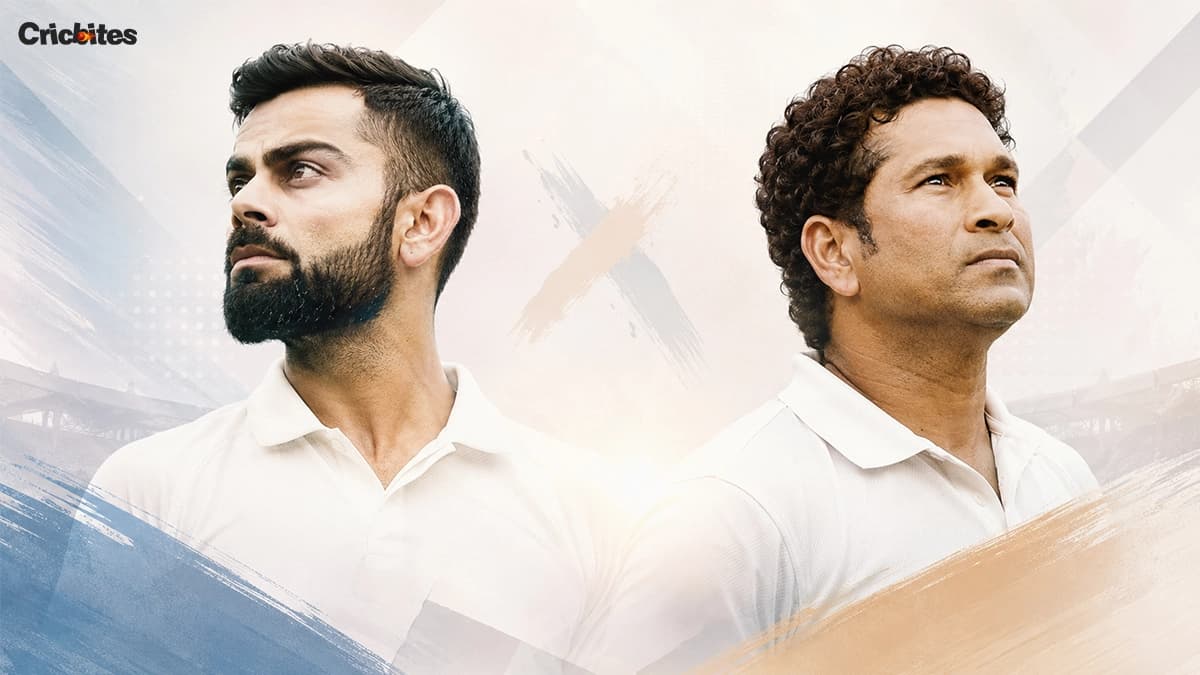
No debate in cricket runs longer or louder than this one. Sachin Tendulkar played 24 years for India and retired as the highest run-scorer in the history of the game. Virat Kohli arrived after him and spent the next fifteen years chasing every record Tendulkar left behind.
Tendulkar is revered as the God of Cricket while Kohli has 85 international centuries and is now just 15 away from breaking Tendulkar’s record of 100 international hundreds. The numbers between them are now large enough to examine format by format without opinion getting in the way.
Test Cricket
Tendulkar played 200 Tests scoring 15921 runs at an average of 53.8 with 51 centuries and 68 fifties. Kohli played 123 Tests scoring 9230 runs at an average of 46.9 with 30 centuries. When compared across the same 123 Tests, Tendulkar leads with 10134 runs at an average of 57.25 against Kohli’s 9230 at 46.85.
Tendulkar also has more centuries and fifties at that stage. The volume gap is significant and so is the average. Tendulkar batted in a harder era of Test cricket with fewer batting-friendly pitches and no protective padding regulations.
Kohli’s overseas record as captain is exceptional but the raw numbers across the same number of Tests still favour Tendulkar. The Test format belongs to Tendulkar.
| Player | Years | Mat | Inn | NO | Runs | HS | Avg | BF | SR | 100s | 50s | 4s | 6s |
|---|---|---|---|---|---|---|---|---|---|---|---|---|---|
| Sachin Tendulkar | 1989–2013 | 200 | 329 | 33 | 15921 | 248* | 53.8 | – | – | 51 | 68 | – | – |
| Virat Kohli | 2011–2025 | 123 | 210 | 13 | 9230 | 254* | 46.9 | 16608 | 55.6 | 30 | 31 | 1027 | 30 |
ODI Cricket
This is where Kohli overtakes Tendulkar on almost every meaningful metric. Tendulkar played 463 ODIs scoring 18426 runs at an average of 44.8 and a strike rate of 86.2 with 49 centuries and 96 fifties. Kohli has played 311 ODIs scoring 14797 runs at an average of 58.7 and a strike rate of 93.8 with 54 centuries and 77 fifties.
Kohli’s ODI average of 58.7 against Tendulkar’s 44.8 is a difference of nearly 14 runs per innings. Kohli has also scored more ODI centuries in 152 fewer matches. Kohli took 287 innings to reach 14000 ODI runs while Tendulkar took 350 innings and Kohli leads on average, strike rate, and fifty-plus scores at that same stage.
Kohli also broke Tendulkar’s record for most fifty-plus scores in ICC ODI tournaments, reaching 24 in 53 innings against Tendulkar’s 23 in 58 innings. In ODI cricket the numbers point to Kohli and they do so clearly.
Related Post: ICC Confirms ODI World Cup 2027 Dates: Oct 4 to Nov 21
| Player | Years | Mat | Inn | NO | Runs | HS | Avg | BF | SR | 100s | 50s | 4s | 6s |
|---|---|---|---|---|---|---|---|---|---|---|---|---|---|
| Sachin Tendulkar | 1989–2012 | 463 | 452 | 41 | 18426 | 200* | 44.8 | 21367 | 86.2 | 49 | 96 | 2016 | 195 |
| Virat Kohli | 2008– | 311 | 299 | 47 | 14797 | 183 | 58.7 | 15771 | 93.8 | 54 | 77 | 1376 | 168 |
T20 International Cricket
Tendulkar played one T20I in 2006, scoring 10 runs. The format arrived too late in his career for a proper comparison to exist. Kohli played 125 T20Is scoring 4188 runs at an average of 48.7 and a strike rate of 137.0 with 38 fifties and one century.
This format is entirely Kohli’s. He captained India to the 2024 T20 World Cup title and retired from T20Is immediately after. Tendulkar never embraced the shortest format at international level and his one appearance is not enough to draw any conclusion. Kohli owns this format outright.
| Player | Years | Mat | Inn | NO | Runs | HS | Avg | BF | SR | 100s | 50s | 4s | 6s |
|---|---|---|---|---|---|---|---|---|---|---|---|---|---|
| Sachin Tendulkar | 2006 | 1 | 1 | 0 | 10 | 10 | 10.0 | 12 | 83.3 | 0 | 0 | 2 | 0 |
| Virat Kohli | 2010–2024 | 125 | 117 | 31 | 4188 | 122* | 48.7 | 3056 | 137.0 | 1 | 38 | 369 | 124 |
Related Post: Sachin Tendulkar vs Shane Warne: Who Is Better? Batting & Stats Comparison
IPL Cricket
Tendulkar played 78 IPL matches for Mumbai Indians scoring 2334 runs at an average of 34.8 and a strike rate of 119.8 with one century and 13 fifties. Kohli has played 283 IPL matches scoring 9336 runs at an average of 40.4 and a strike rate of 134.8 with nine centuries and 68 fifties.
Kohli has four times as many IPL runs and a higher average and strike rate. He is also the highest run-scorer in IPL history. Tendulkar retired from the IPL in 2013 and never had the benefit of playing deep into a long franchise career.
But the numbers across every comparable metric still favour Kohli heavily. IPL cricket belongs to Kohli.
| Player | Years | Mat | Inn | NO | Runs | HS | Avg | BF | SR | 100s | 50s | 4s | 6s |
|---|---|---|---|---|---|---|---|---|---|---|---|---|---|
| Sachin Tendulkar | 2008–2013 | 78 | 78 | 11 | 2334 | 100* | 34.8 | 1948 | 119.8 | 1 | 13 | 295 | 29 |
| Virat Kohli | 2008– | 283 | 275 | 44 | 9336 | 113 | 40.4 | 6926 | 134.8 | 9 | 68 | 844 | 316 |
Who Is the Better?
The honest answer is that it depends on the format and the era. Tendulkar built his numbers across 24 years against some of the most hostile bowling attacks international cricket has ever produced.
Tendulkar’s net worth stands at 170 million dollars against Kohli’s 127 million, reflecting how their respective legacies have been valued across different generations. Kohli built his in a more batting-friendly era but delivered in ICC tournaments and pressure chases at a rate that Tendulkar never matched.
In Tests, Tendulkar is ahead. In ODIs, T20Is, and the IPL, Kohli leads on numbers. The debate will never fully end and that is exactly what makes both careers worth arguing about.
Follow Cricbites for the latest cricket updates, match schedules, player news, records, rankings and expert insights from around the world.
Read More: Ellyse Perry vs Nat Sciver-Brunt: Comparing Batting And All-Round Stats